ORIGINAL BLOG POST PUBLISHED IN FINNISH ON APRIL 23, 2021
READING TIME: 20 MINUTES
Highgrove is Prince Charles’ private estate and manor house in the county of Gloucestershire, where he and Diana moved to live after their wedding day in 1981. Charles and Diana’s former butler, Paul Burrell, served the royal couple at the house from 1981-95 and in 2003 he published a book about his experiences called A Royal Duty. In his book Rebel Prince, Tom Bower says: “Burrell presented Charles as a spoilt brat, similar to the infamous absolute monarchs of the pre-French Revolution who were notorious for their self-indulgence. ” After an accident in a polo match, he demanded that his silver dinnerware be brought to the hospital so that he would not have to eat from the hospital’s own everyday dishes. In his book, Burrell recalled his demanding employer: ‘I learned later that the Prince of Wales had very exact standards to which his servants, from the late Stephen Barry to Michael Fawcett, had to conform. A silver key with his seal on it had to be attached to the end of his toothpaste like the tin key of a sardine jar, and the paste had to be squeezed just enough to fill the entire brush. His cotton pajamas had to be ironed every morning.”.
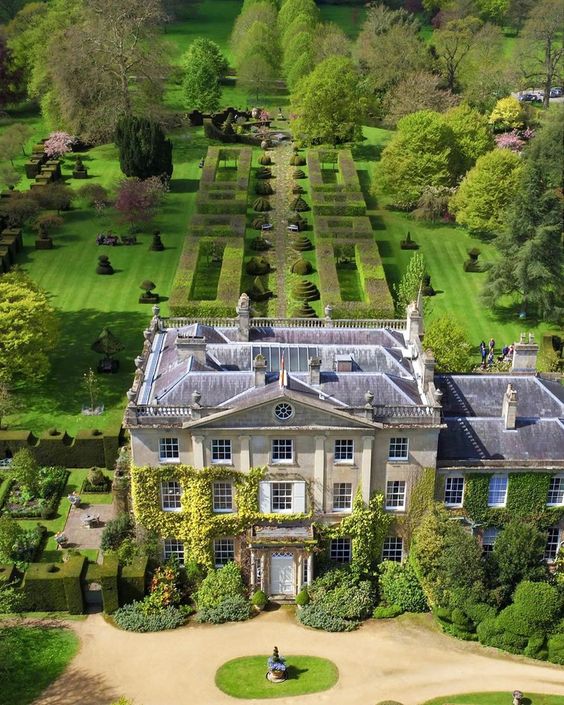
The servants also had to make sure that the Prince of Wales had a hot bath ready every morning and that the towel was placed in the right position. Even the shoelaces had to be pressed every morning to his royal highness. In the Amazon Prime documentary Serving the Royals: Inside the Firm, Burrell said: “And if anyone gets anything wrong everybody is scolded.” Purchased for around £1 million, the Georgian mansion, built in the 1700s, contains nine bedrooms and six bathrooms. Its surroundings have the feel of a spectacular organic garden, which Charles designed with Miriam Rothschild and where he allows paying tourists to visit every year from April to August. Season four of The Crown series depicts a self-absorbed crown prince who ignores his ailing wife while immersing himself in his own organic and spiritualistic dream world, in his ‘Xanadu’. He tells the queen who arrives at Highgrove how “the house, the grounds and the garden must ultimately reflect who and what I am”. According to Wikipedia, “The estate of Highgrove comprises a parkland area bordered by trees surrounding Highgrove House, several farm buildings and approximately 900 acres (3.6 square kilometres) of land farmed by the Duchy of Cornwall.” It is just one of the residences owned by the Prince of Wales, who also has properties in Wales and Scotland and around the world. Bower describes the petty behaviour of a prince accustomed to a luxurious lifestyle and constant service:
Charles’ lifestyle was unusually lavish. With the seven and a half million pounds a year he earned from a farm owned by the Duchy of Cornwall, he employed 90 servants, including 10 gardeners at Highgrove alone, at an annual cost of two million pounds. He was unusually meticulous. Because he banned the use of pesticides at his Gloucestershire house, he hired four gardeners to lie in a slow-moving Land Rover outboard trailer to weed. Retired Indian servants were employed to sneak torches through the undergrowth at night and pluck snails from the leaves of plants… Rather than appreciating his good fortune, Charles often unloaded his resentment, prompting one friend to call him ‘olympian whiner’. Giving in to pressure, in April 2000 he agreed to fly to Europe on a commercial plane instead of a private jet. He returned, vowing never to repeat the experience.
In the company of billionaires, he used to complain about how he ‘pulled the short straw’ in the life, because he was constantly being told what he couldn’t afford. In November 2004, he shouted to his friends: “Nobody knows what absolute hell it is to be the Prince of Wales!” When visiting friends, the visits were preceded by a great deal of arrangement and measures to ensure the comfort of His Royal Highness. On one occasion, Bower says in a book for which he interviewed 120 people close to Charles, a lorry had to bring Charles and Camilla’s duvets and several other pieces of furniture – even Charles’ padded toilet seat – a day earlier to replace the host’s perfectly adequate furniture. Despite these huge arrangements that the hosts had to make in advance for their royal guest, he could cancel the visit on a whim. In one Welsh guesthouse, the host had already ordered four meals for several invited guests and hired servants, food and flowers. On the day of the visit, the host was called from St James’s Palace to say that Charles was unable to come because he could not leave the beautiful sunshine of his Highgrove garden.
On one of his visits to India, he was in the company of banker Jacob Rotschild and other billionaires at the Maharaja’s Palace. During a sumptuous meal, when a large Italian breadstick was placed on the table, a billionaire reached out to take a slice, whereupon Charles shouted at him, “No, that’s mine! Only for me.” Charles’s selfish and childish behaviour often left the party guests puzzled, and left them with a surreal impression at the end of the visit. Paul Burrell, in his book A Royal Duty, says that while serving at the Highgrove, he was often caught in the crossfire of Charles and Diana’s quarrels, and that Charles once summoned him to his office in a fit of rage after discovering that Diana had been aware of Highgrove guests and telephone calls even when he was not present. When Burrell finally had the nerve to ask, with polite insolence, whether ‘Her Royal Highness is asking me to lie’ to Diana on his behalf, Charles exploded: ‘Yes! Yes! I do.”
Throwing the book at Burrell, he bellowed, his head red, “Yes, I do. I am the Prince of Wales and I will be King. So yes!” Burrel says: “His temper was legendary, but until then I never had the misfortune to witness it.” According to Burrel, the Prince was “a renowned object-thrower when he lost his temper.” This claim also seems to hold true according to Bower, who says that at dinner parties Charles threw china plates on the floor and shouted “Everytting has gone wrong!”. This was his reaction to a BBC radio poll in which he was heard to rank fourth in the list of people the British would prefer to expel from their country. Season four of The Crown did a good job of capturing Charles’ behind-the-scenes temperament, but throwing objects around would have brought even more life and colour to Josh O’Connor’s splendid acting performance.
In the YouTube documentary The Man Who Shouldn’t be King, it is told that Charles’ annual income of £20 million is twice the combined annual income of the 25 highest earners at the BBC; and almost as much as all the world’s presidents and prime ministers combined, who earn around £25 million. For example, the annual salary of the US President is only $400,000 a year, about 70 times less than Charles’. Charles’ annual income comes from the Duchy of Cornwall, of which Duke he is, worth of £877 million. This feudal regime treats its tenants like serfs and hardly anyone in Cornwall dares to criticise its policies in public for fear of rising rents. In this almost medieval arrangement, Prince Charles is entitled to inherit the entire estate of deceased Cornish tenants if they have not made a will. Charles is known to have taken more than £3 million into his own purse from the earnings of others, as author Joe Cook explains in Elizabeth II – The Power behind the Throne. Under the Dutchy’s feudal laws, Charles is not liable to pay tax and cannot be required to testify in criminal court.
Despite his unrelenting apocalyptic lament about how the West’s wasteful lifestyle threatens the very existence of our species, he doesn’t seem too concerned about his own ecological footprint. As reported by the Express on 3 April, he is also the most flying person in the Royal Family: “Covering 12,213 miles by air over 25 trips, the Prince of Wales wasted £2,468,501 on his travels” (between 2015 and 2020). This means he flew around the circumference of the globe every year and spent nearly £1 million a year on his travels. With commercial aircraft, traveling would be much cheaper and more ecological, but as Bower says, Charles has a habit of complaining about “incredibly uncomfortable first-class seats.” For this reason, he chooses to fly mostly in his private plane.
Dharavi and the “grammar of harmony”

Let’s go into a slightly different world. Dharavi, in Mumbai, India, is one of Asia’s largest and most densely populated slums. Compared to Charles’s 3.6 square kilometres of private space, it’s just 2.1 square kilometres, and a home to around a million people. Dharavi consists mainly of tin shacks piled on top of each other and next to each other, with an environment that looks more like a landfill than a residential area. Wikipedia reports on the slum’s poor public health:
Dharavi has several public health problems. Access to water is blocked by public pipes laid through the slum. In addition, the limited toilets they have are extremely dirty and broken to the point that using them has become unsafe. Mahim Creek is a local river used by local residents for urination and defecation leading to the spread of infectious diseases. The town’s open sewers drain into the creek causing spikes in water pollution, septic conditions and unpleasant odours.
Due to air pollution, diseases such as lung cancer, tuberculosis and asthma are common among residents. There are government proposals regarding the improvement of sanitation problems in Dhravi. Residents have a ward where they wash their clothes in water that people have defecated in. This spreads the disease, as doctors have to deal with more than 4,000 cases of typhoid every day. In 2006, a UN Development Assistance Report estimated that there is an average of 1 latrine for every 1440 people in the region.
Dharavi has gone through a long history of epidemics and natural disasters, sometimes with significant loss of life. The first plague to hit Dharavi, along with other settlements in Mumbai, occurred in 1896, when nearly half of its inhabitants died. A series of plagues and other epidemics continued to ravage Dharavi and Mumbai more widely for the next 25 years, with high mortality rates.
Outbreaks of dysentery have been common for years, which is explained by the high population density in Dharavi. Other reported epidemics include typhoid cholera, leprosy, amebiasis and polio. In 1986, for example, a cholera epidemic was reported in which most of the patients were children. Typically, patients who arrived at the hospital were in late and critical care and mortality was unusually high. In recent years, drug-resistant cases of TB have been reported in Dharavi.
Due to poor sanitation in slums, infant mortality is particularly high. One health centre in Mumbai reports that the infant mortality rate in Dharavi is 27.14%, while in most of the developed world it is less than 0.5%. For example, thanks to Finland’s advanced public health, the infant mortality rate for children under 1 year of age is only 1.5 children per 1,000 live births, or 0.15%. Even in the world’s poorest countries, infant mortality rates do not reach Dharavi’s unusually high levels. Such places also have particularly high fertility rates, as high fertility correlates with poverty in the region all over the world. So if anyone is concerned about high population growth in developing countries, the best way to tackle it is to tackle poverty and reduce infant mortality, not to bomb cities with nuclear weapons, or to wage chemical and bacteriological warfare against the civilian population of large population centres, as our “beloved” deep ecologist Pentti Linkola suggested. Apart from infectious diseases and air pollution, the inhabitants of densely populated slums such as Dharavi may also meet a very unpleasant end when they literally drown in shit. On 27 February 2017, The Guardian newspaper ran a sordid story about unsafe toilets in slums:
On the morning of 4 February, Harish Tikedar, Ganesh Soni, and Mohammed Isafil Ansari waited in line to enter a community toilet in the Indira Nagar slum in East Mumbai. All of a sudden, its bottom floor collapsed, causing Tikedar, Soni and Ansari to fall into a septic tank four and a half metres below. Two others who also fell – Sirajjudin Turat and Ramakant Kanojia – managed to hold on to the sides until they were rescued. “I was up to my shoulders in slime,” says Turat. “I could feel it pulling me down, but somehow I held on to the slab. Then some people pulled me up and I fainted.” The five men who were pulled up were unidentified and covered in excrement. They were all taken to a nearby hospital, but Tikedar, Soni and Ansari did not survive.
Instead of feeling sorry for the poor who have had move to such places or who were born there, Charles, whose servants have to carry around a toilet seat emblazoned with the Prince of Wales’s feathered badge to match the dignity of his royal posterior, praises Dharavi as a model of sustainable urban planning. The Telegraph reported on 6 February 2009 how Prince Charles praised Dharavi’s “underlying grammar of intuitive design, which is completely lacking from the faceless slabs still being built around the world as ‘storage for the poor’”. He referred to the district’s use of locally sourced materials, its business and homes
balance of business and commerce, and its walkable neighbourhood as evidence of its superiority. “I strongly believe that the West has much to learn from communities and places, though often poorer materially, are infinitely richer in the ways their residents live and organize themselves into communities,” Prince said. He continued: “It may be that in a few years time such communities will be seen as best equipped to face the challenges that confront us, because they have built-in resilience and genuinely sustainable ways of life.”
So here Prince Charles is openly acknowledging what the “sustainable development” is really about. The term ‘sustainable development’ is rather misleading, because it is not about development at all but, on the contrary, about preventing the poorest in the world from developing and the West’s economic growth. In his book Harmony: A New Way of Looking at Our World, he continues Dharavi’s glorification of a “sustainable [i.e. poor] lifestyle”:
“It [Mumbai] also has the largest slum in Asia – an area called Dharavi, where 600,000 people are crammed into an area of less than four miles. I went to Dharavi and heard from people who live there how the area is the result of previous attempts to remove the poor, the homeless, from other parts of Mumbai. It grew until it was packed full of apartments piled up by residents. There was no central planning, but it is amazing how people become organised out of emptiness. Property rights and boundaries are understood, as are the rules around sparse communal spaces – like a few toilets…”
“I have found that many observers of communities like Dharavi are quick to note the absence of physical benefits such as electricity, water, and sanitation, rather than see the presence of this infinitely more important though less tangible community capital, which allows many apparently poor communities to organise themselves from the bottom up. The temptation is also to see their material poverty, rather than the rich complexity and diversity that holds a community together despite trying and unpleasant circumstances – to see deprivation rather than the order that has emerged naturally through the complex interactions of people.”
The romanticisation of places plagued by poverty, disease and death for their “communal capital” brings to mind the statement of Adolf Eichaman, known as the “architect of the Holocaust”: “The Jews were grateful for the opportunity I gave them to learn community life in the ghetto. It was an excellent school for their future in Israel – basically most Jews were well and happy with their ghetto life.” In fact, 800 people a day were dying in the Warsaw ghetto from disease and lack of food due to overpopulation and poor hygiene alone, as The American Jewish World reported on May 1, 1942. Eichmann, who was responsible for the logistical planning of the ‘final solution’ of the Jewish question, fled to Argentina after the war and was tried in Jerusalem in 1962. JHe is also known for the following chillingly hardened statement, which Dieter Wisliceny testified saying at Nuremberg court: ‘I leap into my grave laughing, because the feeling that on my conscience has the death of five million people is a source of unusual satisfaction to me.’
Burning bush and fiery chariots
The late Christian author and journalist Joan Veon, who in the 1990s investigated Prince Charles’ lesser-known role behind the 1992 Rio Earth Summit and the UN’s Agenda 21, said she had the opportunity to interview late Maurice Strong (died in 2015), the Canadian millionaire and gentleman who led UN environmental policy since 1972. According to Joan Veon, Strong told her he was in London for a meeting of the World Wildlife Fund WWF, hosted by one of its founders, the Queen’s husband Prince Philip. At that meeting, Prince Charles asked Strong to accompany him to Rio for the April 1991 meeting. Veon reported in August 2004:
In April 1991, 14 months before the Rio Earth Summit, the Prince held a two-day international conference on board a Royal British yacht moored off the coast of Brazil. His aim was to bring together key international leaders in an attempt to reach a consensus among the many countries that would be represented at the Rio Summit. The then Senator Al Gore was there, along with senior World Bank officials, CEOs of companies such as Shell and British Petroleum, key non-governmental organisations and other authorities… Moreover, in 1990 when sustainable development had just been formed by the Brundtland Commission, it was the Prince who told them to “bring the term ‘sustainable development’ into everyone’s vocabulary.”
Mikko Paunio, a Finnish health specialist and epidemiologist who has shared some of my blog posts or YouTube videos on social media, has exposed the embarrassing history of Maurice Strong in his books Vihreä valhe – Valheen sysimustat juuret, salakavalat lonkerot ja murheelliset seuraukset (Auditorium Publishing Company, 2015) and The Hourulanväen ilmastovallankumous Hourulan väen ilmastovallankumous (self-published, 2019). In the latter, he writes of Strong on page 24: ‘He was a “socialist” mystic attracted to theosophical or esoteric ideas. His Baca Grande retreat, dedicated to natural religion, is located in Colorado, USA. There, in 1990, he told an astonished Daniel Wood, an editor of a Canadian magazine in Alberta, that he had seen divine premonitions, including a burning bush. This few-day visit to Maurice Strong and his wife Hanne in Baca Grande was a memorable visit for Daniel Wood, with its Zen monks and magic crystals.”
Charles is also famous for his obsession with mysticism, spiritualism and the occult, which he was introduced to in the 1970s by his friend Laurens van der Post. Van der Post, who believed to be a reincarnation of medieval templars, once introduced his friend to an elderly woman named Kathleen Raine, who was so impressed by the young prince’s passion for mysticism that she pompously prophesied: ‘How my heart rejoices that you have harnessed the chariot. The chariots of fire come between two armies. This is a great battle, and where would you, our prince, be rather be than in that chariot.” Bower writes, “Most men of 50 would have laughed at Raine’s grandiose rhetoric, but Charles breathed his words like oxygen.” The aforementioned Daniel Wood reported in West magazine in May 1990 about his visit to Strong’s private estate: “Strong, Wood wrote, believes that the one thing that could save the country is ‘a worldwide spiritual revival and Baca Grande was dedicated to that end.’”
But this alone would not be enough. While driving in the car, Strong started telling him about a short story he wanted to write. The plot of the novel was that a small group of world leaders had come to the conclusion that the world had to be saved at any cost and that international agreements reached by consensus were no longer sufficient. “So in an attempt to save the planet, the group decides, Strong told Wood: isn’t the only hope for the planet that industrialized civilizations will collapse? Isn’t it our responsibility to make that happen?” So this clique of world leaders forms, according to the plot of the short story as outlined by Strong, a conspiracy to bring about economic collapse. “They’re all in Davos. They’re not terrorists. They are world leaders. They have positioned themselves in the world’s commodity and stock markets. They are planning a panic, using their access to the stock market and computers and gold stocks. Then they stop the world stock markets from closing. They hire a gang of criminals to hold other world leaders hostage in Davos. The markets cannot close.” So this is the kind of novel conceived by the man who, together with the Prince of Wales, has steered the entire global environmental debate and policy. In 2011, Charles punched climate sceptics in the face in Brussels with the following statement:
They assume that hundreds of scientists around the world and those who accept their dispassionate evidence – including myself, who somewhat ironically is constantly accused of being anti-science -… are secretly conspiring to deliberately undermine and destroy the entire market-based capitalist system.
Nevertheless, he has been quite open about his explicit goal of destroying the entire capitalist economic system and creating a new global order. A year earlier, he told America’s NBC News’ Brian Willams: ‘Everybody is terrified. They seem to think that the mere suggestion that economics can be looked at in another way is a some kind of monstrous threat to capitalism itself.” So the prince’s own speeches and actions prove – not to mention his involvement in the latest totalitarian The Great Reset project “where no one would own anything by 2030” – that he is indeed “conspiring to deliberately undermine and destroy the entire market-based capitalist system.” Couple this with Charles’ delusions of himself as a leader of the “Chariots of Fire” fighting against the “forces of darkness” as Laurens van der Post and Kathleen Raine led him to believe, and it’s a pretty dangerous combination. We already know how the Nazi obsession with mysticism and the occult led to the deaths of millions in their new order, in which environmentalism and nature conservation played also a central role. As the philosopher George Santayana said:
Those who do not remember the past are condemned to repeat it.”
 Author & blogger Samuel Tuominen’s archives
Leave a comment