TIME TO READ: 35 MINUTES
LISTEN TO THIS ARTICLE
About a week ago in October, I published a recorded interview where I analyzed the prophetic visions of the book of Daniel in relation to the major events in the history of Christendom. The interview’s thumbnail questioned whether Daniel’s visions encompassed the history of Christianity, Islam, and Judaism. I messaged the interviewer, a friend of mine, to discuss the potential of publishing a sequel where I would explain the fulfillment of Daniel’s visions in the context of modern history. While the previous interview primarily focused on the history of late antiquity and the Middle Ages, the proposed sequel would explore the events of the Modern Era. The new era is commonly believed to have commenced with either the fall of Constantinople in 1453, the discovery of the Americas in 1492, or the inception of the Reformation in 1517. In the previous interview, I already touched upon certain events of the Modern era, such as the rise and decline of the Ottomans and British dominion in Palestine after the First World War.
The fulfillment of Daniel’s visions in the historical events of Christianity is such an interesting topic that I cannot resist writing about it on my blog as well. Biblical prophecies in general, and Daniel’s visions in particular, have sparked my interest in history more than anything else. I have been reading eschatological literature since I was a young boy, so I am quite familiar with the classical interpretations of Daniel’s visions supported by our church fathers. In my interpretations of prophecies, I strive to respect the old traditions. This approach is rooted in the belief that the Holy Spirit has not only preserved the correct translation of God’s Word throughout the history of Christianity but has also inspired its proper interpretation. “For no prophecy was ever made by an act of human will, but men moved by the Holy Spirit spoke from God.”1This does not mean that the interpretation of any biblical scholar regarding prophecies or other passages of Scripture has ever been perfect. As imperfect human beings, “we all stumble in many ways”2 “For we know in part and prophesy in part.3
Content
- Understanding Increases
- Dispensationalism and Christian Zionism
- Metaphor of Two Mountain Peaks
- …and its issues
- Christian Gentile Nations and the Jews
- Israel, the Arabs, and the End of the British Empire
- The Vision of the Four Beasts: 3rd Fulfillment?
- Circular Reasoning?
- The End of Papal Power
- The Lion, Bear, and Leopard in the Modern Age
- The Four Kingdoms of Germany
- Poland’s history in Daniel’s visions?
- The Fulfillment of the End Times and Its Four Stages
- Conclusion
Understanding Increases
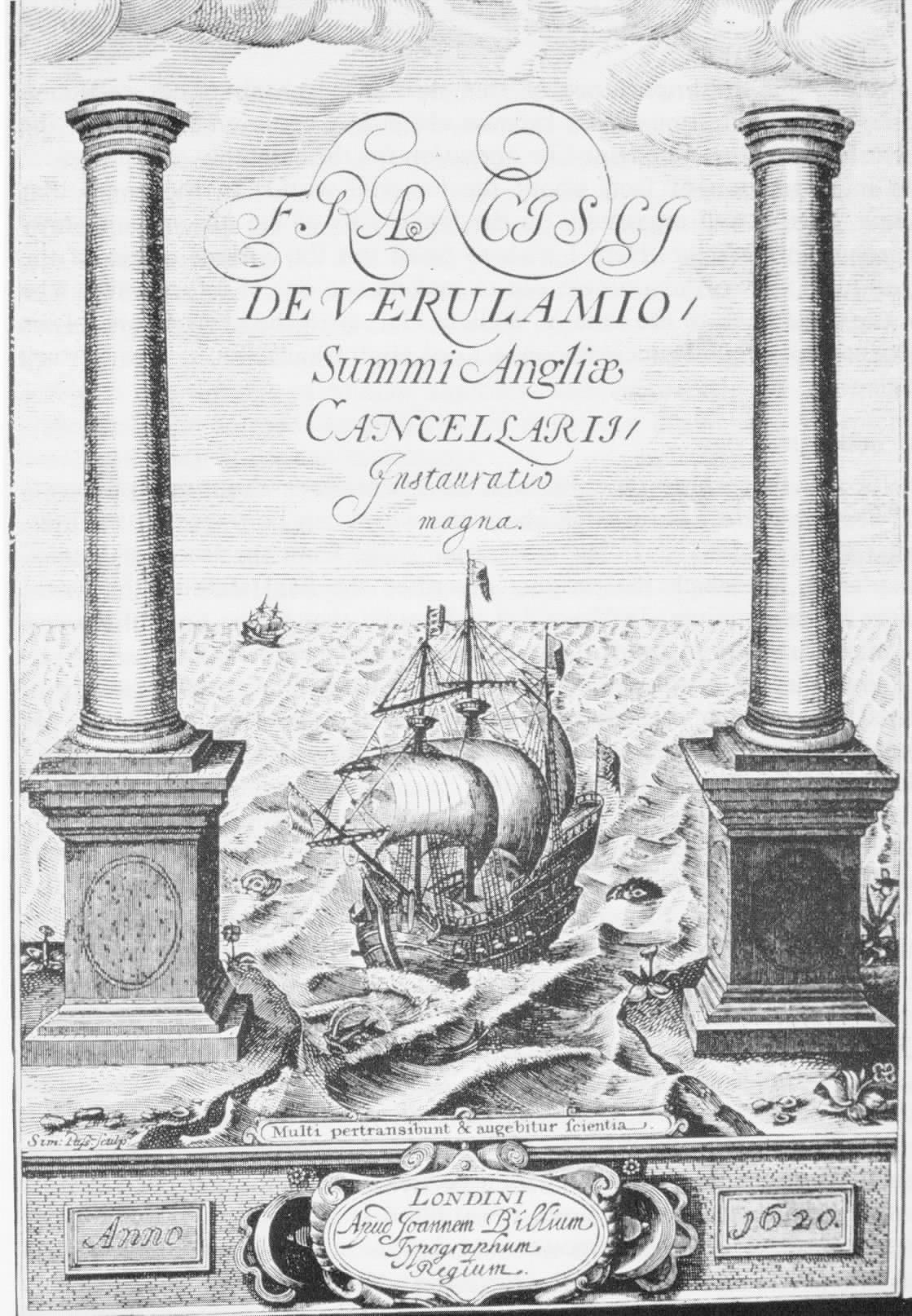
Respecting church traditions should not limit the interpretation of prophecies, as the book of Daniel itself emphasizes that understanding of its prophecies will increase as the end approaches: “But as for you, Daniel, keep these words secret and seal up the book until the end of time; many will roam about, and knowledge will increase.”4 This verse can also be understood as a prophecy that knowledge as a whole will exponentially increase as the end draws near, as understood by figures like Francis Bacon and Isaac Newton, the pioneers of the scientific revolution. However, the increase in knowledge does not automatically lead to an increase in wisdom or understanding, as history has shown many times. In my opinion, the biggest obstacles to the correct interpretation of the inspired Word of God are two extremes. On one extreme, there is a kind of Catholic error that places traditions above the principle of Sola Scriptura. On the other extreme, there is a kind of Protestant error where all traditions are discarded because Protestants believe in the priesthood of all believers, where anyone can claim that the Holy Spirit has revealed to them the correct meaning of a particular verse.
This often leads to a caricature of Protestantism where Christians argue with each other and form their own sects because everyone’s “personal Holy Spirit” contradicts what the same Holy Spirit had revealed to another brother or sister in Christ just moments before. That is why I personally try to avoid expressions like “the Holy Spirit has revealed to me…” Let the readers of my blog decide for themselves whether the Holy Spirit has been guiding my understanding of prophecies correctly. I also agree with the Protestant belief in the priesthood of all believers5 where the Holy Spirit can open up new and fresh perspectives on the meaning of His Word to every truth-loving and humble Christian.
But revelation and tradition should always be somewhat balanced. Spirit-inspired revelation should not contradict with Scriptures as a whole, nor should it disregard the wisdom of past generations, as if the Holy Spirit had been asleep throughout the centuries of the Christian Church. However, it must be added that just like Catholics, Protestants, and evangelicals can too be prisoners of their own traditions. Therefore, Protestants may also be reluctant to embrace new perspectives if they conflict with established viewpoints.
Dispensationalism and Christian Zionism
As I mentioned during my interview, the prevalent eschatological doctrine among evangelicals and Protestants, known as dispensationalism, is based on the simple idea that the concept of time in the Bible can be divided into various dispensations or periods of divine administration of God. Through these dispensations, God has divided our history into different epochs and covenants in which He reveals His will to humanity in different ways. However, the ultimate goal of this divine administration has always been the redemption of creation from the consequences of human sin.
For many non-Christians or lay Christians, it might be difficult, for example, to understand why the God of the Old and New Testaments, who is believed to be the same, created the Judaistic religion with its legalistic teachings only to abolish it 1500 years later in the new covenant of Jesus Christ. Paul provided an answer to this in Romans chapter 3.
Now we know that whatever the Law says, it speaks to those who are under the Law, so that every mouth may be closed and all the world may become accountable to God; because by the works of the Law none of mankind will be justified in His sight; for through the Law comes knowledge of sin.
But now apart from the Law the righteousness of God has been revealed, being witnessed by the Law and the Prophets, but it is the righteousness of God through faith in Jesus Christ for all those who believe; for there is no distinction, for all have sinned and fall short of the glory of God, being justified as a gift by His grace through the redemption which is in Christ Jesus, whom God displayed publicly as a propitiation in His blood through faith. This was to demonstrate His righteousness, because in God’s merciful restraint He let the sins previously committed go unpunished; for the demonstration, that is, of His righteousness at the present time, so that He would be just and the justifier of the one who has faith in Jesus
In other words, the fall of the Jews under the Mosaic law covenant was part of God’s providence or His foreknowledge of the future, as it was never intended to be the final covenant through which God would fulfill the redemption of the entire creation from the curse of sin. If the people of Israel had never sinned against their Creator and had fulfilled the conditions of the law covenant perfectly, there would have been no need for a Redeemer who was punished as the innocent victim for the transgressions of His own people, and of all nations, whose sacrificial death on the cross the animal sacrifices of the Mosaic covenant served only as a prefigure. However, the purpose of the law covenant was to demonstrate man’s inability to fulfill the law so that all – both Gentiles and Jews – would become guilty before God. And as Jesus said, “It is not those who are healthy who need a physician, but those who are sick; I did not come to call the righteous, but sinners.”6
Even in the Old Covenant, the saints had a glimpse of the coming new covenant in Jesus Christ because God had already revealed it to them through the prophets of Israel.7 But the full meaning of these prophecies was revealed to God’s saints only after the crucifixion of Jesus Christ. Similarly, there are many prophecies in the Holy Scriptures about the coming millennial kingdom of peace that may puzzle God’s saints living in the present dispensation, such as the mention of animal sacrifices in the coming temple of Jerusalem.8 But just as the saints of the Old Covenant could not yet comprehend the prophecies of the Messiah’s death, we should not expect to fully understand everything related to the coming age. Often, God reveals the meaning of prophecies concerning future only when the time is right.
For the same reason, the Holy Spirit veiled from many theologians of the Christian church for centuries the Old Testament prophecies about the literal return of the Jews to their ancestral land and the future glory of the nation of Israel, because understanding that mystery did not become relevant until the 1800s. As a result of this, however, a heretic replacement theology arose, often justifying “Christian” anti-Semitism. But we cannot blame God for this, because anti-Semitism contradicts everything that Jesus and the apostles taught in the New Testament about loving one’s neighbor, loving one’s enemies, and the fact that God had not rejected His own people despite their temporary apostasy, and their rejection of their Messiah, as Paul emphasized to the Gentile Christians in Romans 11.
As a counter-argument to Christian Zionism – which dispensational eschatology has been promoting since the 1830s – it has often been argued that the Jews’ right to their land was conditional9 and because they violated the conditions of the Mosaic law covenant and followed false gods, God would have also deprived them of the right to the land of Israel. This argument is mostly heard from present-day “Christian” anti-Semites and anti-Zionists. It fails to mention that the land of Israel was promised to the descendants of Jacob, from whom the Jews are considered to be descended from the tribe of Judah, by God not through Moses but through Abraham, Isaac, and Jacob. Paul himself taught in the New Testament that the covenant of the law, which came 430 years later, did not nullify the promises given in that earlier covenant.10 Moses only confirmed the promise that God had given earlier to Abraham, Isaac, and Jacob.
Indeed, through the conditions of the law covenant, God punished His people’s transgressions often by sending the Gentiles to destroy the temple in Jerusalem and drive His people into the diaspora. But at the same time, He told them through His prophets that despite Israel’s transgressions, He would ultimately restore His people to their own land and have mercy on them for the sake of His own name. Not because they had earned it themselves. Leviticus 26, Jeremiah 31, and Ezekiel 36 are good examples of these prophecies. I wrote an essay of many pages on this subject over ten years ago, which I meant to give to the Jehovah’s Witnesses who used to visit my doorstep denying Israel’s right to the land that God Himself gave them. It is, of course, just one of Jehovah’s Witnesses’ numerous false teachings with which they tried to lure me into their heretic sect.
Metaphor of Two Mountain Peaks
So here I agree with dispensational theology and eschatology. The current dispensation, known as the age of the Christian Church, should be distinguished not only from the previous era of the Old Covenant based on the observance of the Mosaic Law but also from the future dispensation that is intended for the salvation of the people of Israel. This future salvation of Israel is described in Zechariah 12:10 and John 19:37, where it is written, “And I will pour out on the house of David and on the inhabitants of Jerusalem the Spirit of grace and of pleading, so that they will look at Me whom they pierced; and they will mourn for Him, like one mourning for an only son, and they will weep bitterly over Him like the bitter weeping over a firstborn.”
Closely related to this is the dispensational interpretation of the seventy-week prophecy of Daniel 9. According to this interpretation, the “clock” of Israel’s seventy weeks stopped at the crucifixion of Jesus, with the sixty-ninth week ending at the events of Golgotha. The final seventieth week will begin only after the “times of the Gentiles” have been fulfilled. As a sign of the fulfillment or approaching fulfillment of the times of the Gentiles, dispensationalists often point to the reestablishment of the State of Israel in 1948 or the return of Jerusalem to the Jews in the Six-Day War of 1967.11 Even the earliest church fathers, such as Irenaeus, taught that the seventieth week of Daniel’s prophecy is yet to be fulfilled and will occur during the reign of the Antichrist. I have also defended the biblical validity of this view in my previous blog post here, so I won’t go into it further this time.
Of course, the dispensational interpretation of the seventy-week prophecy in Daniel 9 requires a temporal gap or hiatus in the chronology of the prophecy, which some Christians find difficult to understand. Dispensational prophecy teachers have often explained it using the analogy of two mountain peaks. It goes like this: Imagine standing on the summit of a high mountain. From there, you can see the summit of a nearby mountain, but you cannot see the valley between them because it is covered by clouds. According to this analogy, the age of the Christian Church is like the valley between those two mountain peaks, which Daniel and other Old Testament prophets were unable to see. Or rather, God revealed to them things about the future that would only be relevant to the future of the people of Israel.
…and its issues
This, however, raises the question: why would the over 18 centuries of Jewish diaspora not be significant to their history? This period includes numerous tragic times of Jewish persecution and expulsions from those gentile nations where they had resided for centuries, culminating in the rise of the Nazis and the Holocaust, in which about six million mostly Ashkenazi Jews living in Eastern and Central Europe lost their lives, six times the number of Jews who died in the 70 AD exile predicted by Jesus in the Gospels.12 The Jewish aliyah, the return of the Jewish people to the land of Israel, and the rebirth of the State of Israel, also happened during the current dispensation, or “times of the Gentiles,” as referred to by Jesus in Luke’s gospel chapter 21. The current state of Israel is already 75 years old and has gone through many significant wars to secure its existence, with the current conflict against Hamas in Gaza being the latest example.
All of this is part of those times of the Gentiles that dispensationalists argue fall outside the scope of Daniel’s vision. In addition, it must be asked why the era of the Christian Church and 2000 years of the most significant events in world history would be completely overlooked in Daniel’s prophecies, even though Daniel’s visions in chapters 2 and 7, along with their parallel visions in chapters 8 and 11, mainly concerned gentile nations and not Israel. The history of those foretold gentile nations – Babylon, Persia, Greece, and Rome – does overlap with Jewish history during that time, but the history of the gentile nations during the era of the Christian Church was also significantly intertwined with Jewish history.
In other words, why would Daniel be shown only the rise and fall of ancient gentile nations, but not an equally significant period of gentiles during the Middle Ages or the modern era? The empires that emerged in the modern era had much larger spheres of influence than those of ancient world empires. The Wikipedia list of largest empires in history shows that the Spanish colonial empire was more than twice the size of the Roman Empire or Cyrus the Great’s Persian Empire, while the Russian Empire was more than five times larger than those two, and the British Empire could have accommodated about seven Roman Empires within its sphere of influence.
Christian Gentile Nations and the Jews
The history of all these modern gentile nations is closely intertwined with the history of the Jews as well. The Spanish colonial empire began with the expulsion of the Jews from the Iberian Peninsula in 1492 (the same year Columbus discovered the New World, sponsored by King Ferdinand and Queen Isabella). Also in that year, the Muslim occupation of Spain, known as Al-Andalus, which had lasted for over 700 years, came to an end. However, the process of expelling the Muslim occupiers took several centuries and was not completed in a single day by the Roman Catholic Christians. The history of the Russian Empire is also filled with pogroms, that is violent anti-Jewish riots, incited or organized by the secret police of tsar, that were often as barbaric as the October 7 events in Israel.
These pogroms also facilitated the First Aliyah, the mass immigration of Jews to Erez Israel in the 1880s. At the same time, the British Empire began to support Zionism, initially in the form of Christian Zionism, to which Foreign Minister and later Prime Minister Henry Palmerston became sympathetic in the 1840s. Palmerston wrote enthusiastic letters to his wife expressing his belief in the literal fulfillment of biblical end-time prophecies regarding the future return of Jews to the promised land. Later, the British Empire also began supporting secular political Zionism, founded by Theodor Herzl, an Austro-Hungarian Jew, when Lord Balfour issued the famous Balfour Declaration after the British occupation of Palestine from the Ottoman Turks in World War I in 1917.
However, this early British support for Zionism and the idea of a Jewish state did not last until the end. The later history of the British Empire is very shameful. During the reign of King George VI – the “stuttering king” romanticized in the 2011 Hollywood film “The King’s Speech” – Britain turned its back on the Jews of Palestine and Europe. In the spring of 1939, King George VI urged his Foreign Minister, Lord Halifax, to approach the German authorities to inform them that the king “was glad to know” that Hitler’s government began to restrict Jewish emigration from their European homelands. Halifax’s office sent a telegram to the British Ambassador in Berlin, asking him to encourage the German government to control the “unauthorized emigration’ of Jews” to Palestine. Therefore, King George VI, the grandfather of Charles III, did not urge Hitler to stop persecuting the Jews that were causing their escape from Europe but to prevent their entry into British-controlled Palestine which was their only safe haven at the time.
At the same time, Prime Minister Chamberlain’s government also issued the infamous White Paper, stating that it was no longer His Majesty’s government’s intention to establish a Jewish state in Palestine, but rather the creation of an Arab state in Palestine, where Jews would be a minority. According to the policy at the time, the 450,000 Jews living in Palestine were already sufficient, and it did not allow this number to surpass 525,000 within the next five years. After that, decisions regarding Jewish immigration would be made by the Arab leaders of the region, such as the Grand Mufti of Jerusalem, Amin al-Husseini, who plotted with the Nazis and incited Hitler to commit genocide against European Jews. The ultimate goals of the Mufti and Hitler were to extend the Jewish genocide to the Jewish population in Palestine as well, and this would certainly have happened if the Axis powers had emerged victorious in World War II.
Israel, the Arabs, and the End of the British Empire
But if this wasn’t shameful enough, after the war, the government of George VI sought to “make amends” for their sins by secretly inciting Arab countries in the Middle East to declare a war of destruction against the Jewish State that was just survived from holocaust after the country would declare its independence from British rule. Hard to believe? This was revealed in Israel’s oldest newspaper, Haaretz, on September 14, 2014. The British Empire only began to show more sympathy towards the Jewish state during the 1957 Suez Crisis when Egypt’s Gamal Abdel Nasser attempted to nationalize the Suez Canal, which was under British control, and Israel assisted Prime Minister Anthony Eden in restoring British dominance over the canal.
Nasser emerged from the war as the victor, and as a result, the Suez Crisis was seen as the end of British hegemony and the beginning of the downfall of the British Empire. In the following decades, the United States strengthened its relationship with Israel, while the Soviet Union aligned itself with the Arab nations. This period in the history of the Middle East was characterized by Arab dictators who blended elements of national socialism, Marxism, and Islam, torturing their political dissidents in dark prisons while colluding with the Soviet Union to destroy Israel.
Islamic extremism began to rise in the 1970s with the Iranian Revolution, which also inspired the formation of other Islamist death-cults such as Al-Qaeda and Hamas in the 1980s. Leaders like Nasser and Saddam Hussein may have been ruthless dictators, but in many ways, they were angels compared to the Islamist leaders who followed them in the Middle East, such as Iran’s Ayatollah Khamenei, Hezbollah’s Hassan Nasrallah, and Hamas leader Ismail Haniyeh, who lives a life of luxury in Qatar while using the impoverished people of Gaza as human shields against Israeli airstrikes.
The Vision of the Four Beasts: 3rd Fulfillment?
The aim of the previous summary of history was mainly to demonstrate the significant role played by the major powers of the modern era, such as Great Britain, the United States, Russia/Soviet Union, and Germany, in the history of the Jewish people and the Jewish state over the past couple of centuries. Therefore, it is not far-fetched to assume that the history of these nations can also be found in the fulfillments of Daniel’s visions. As for the early modern era’s leading “superpowers” like the Spanish colonial empire or the Ottoman sultanate, whose “golden age” fall mainly between the 16th and 17th centuries, their historical role can be found in the second fulfillment of Daniel’s vision of the four beasts and its parallel vision in chapter 8.
If the reader has not yet listened to my recent interview on this topic, I explained how Daniel’s vision in chapter 7, with the little horn of the fourth beast, predicted the rise of the Roman Catholic papacy in the Middle Ages as the successor to the Western Roman Empire, and how the vision in chapter 8, also with the little horn, predicted the rise of the Ottoman Sultanate as the successor to the Eastern Roman Empire. This interpretation of the historical fulfillment of Daniel’s visions covers two consecutive and complementary fulfillments for both the visions in chapter 7 and chapter 8. The list below may help clarify the matter:
First fulfillment:
- The First Beast (a lion with eagle’s wings): Neo-Babylonian Empire (626-539 BC)
- The Second Beast (a bear lying on its two sides): Median and Persian Empires (678-549/550-330 BC)
- The Third Beast (a leopard with four heads and four wings): Alexander the Great’s Greece and its four Hellenistic successor kingdoms (330 – 63 BC)
- The Fourth Beast (Ten-horned beast): The Roman Empire, which disintegrated into ten kingdoms in 476 AD (27 BC – 476/1453 AD)
- A little horn rising among the ten: Papal authority, before which three previous kings were overthrown, referring to the three other kingdoms of those ten previous kingdoms which ruled over Rome and Italy before the rise of papal states in the 8th Century AD, i.e., the kingdoms of Odoacer, the Ostrogoths, and the Eastern Roman Empire (476 – 781 AD)
- That horn seemed bigger than the others: Despite its humble beginnings, by the 13th century, the popes of Rome ruled over all of Western Europe and even Constantinople, the capital of the Eastern Roman Empire. Pope Boniface VIII declared in his famous bull, Unam Sanctam, in the early 1300s that only those who submitted to the authority of the pope could escape eternal damnation, which caused even the Catholic monarch of France, Philip IV, to lose his cool and led him to arrest the pope on charges of collusion with the devil. Dante also condemned this arrogant pope to hell in his Divine Comedy, one of the most influential classics of Western literature.
Second fulfillment:
- The First Beast (a lion with eagle’s wings): Seleucid Hellenistic-Babylonian Empire (312-63 BC)
- The Second Beast (a bear lying on its two sides): Parthian and Sassanid Persian Empires (247 BC – 224 AD / 224 – 651 AD)
- The Third Beast (a leopard with four heads and wings): Emperor Heraclius’ Greece (Byzantium/Eastern Roman Empire) and the four themes into which Byzantium was divided after the Byzantine-Sassanid Wars and Muslim conquests in the 640s (610-1204/1453 AD)
- The Fourth Beast (ten-horned beast): The revival of the Roman Empire in the medieval Roman Catholic Papal authority (1204 – ?)
Circular Reasoning?
As can be seen from the example observations listed above, each of the four beasts, in their first and second fulfillment phases, follows one another’s historical epochs almost consecutively. The second fulfillment phase continues its historical narrative from where the previous fulfillment phase culminated in Daniel chapters 8 and 11, namely the reign of Antiochus Epiphanes, who rose from the Seleucid Empire. The third fulfillment phase continues the depiction of historical events from where the first and second fulfillment phases culminate in Daniel chapters 7 and 8, namely the rise of papal power and the Ottoman Empire in the Middle Ages.
Therefore, the Roman Catholic empires that were subordinate to the Pope such as Spain and Portugal are included in the context of the second fulfillment phase of this fourth beast (or in the context of the little horn of the first fulfillment phase). The same can be said for medieval France, Germany, and England, the nations that participated in the Pope’s instigated crusades against the Saracens or Arabs of the Holy Land. However, this interpretation poses a significant problem: is the vision of the four beasts and their parallel visions an endless historical cycle? In other words, does a new historical repetition of the four beasts always begin when the previous fulfillment phase ends? How do we know that this cycle does not continue indefinitely?
However, my claim is not that the book of Daniel predicts the rise and fall of eight, twelve, or sixteen godless gentile empires before Jesus’ second coming and the establishment of His eternal kingdom of peace. The repetitive fulfillments do not reset or restart the conditions of the vision’s first fulfillment phase. They do not change the fact that Daniel prophesied the rise and fall of only four gentile empires, not eight or twelve gentile empires. In other words, Daniel’s first and original fulfillment phase of the four beasts already provides us a linear and uninterrupted historical description from Daniel’s time to the end of known history.
The repetitive fulfillments of the beasts do not alter or invalidate this fact. Instead, they only complement the historical description of the vision’s first fulfillment by providing more comprehensive details of the events related specifically to the rise and fall of the last beast. Thus, the depiction of the second fulfillment phase, involving the Parthian and Sassanian Persian Empires, is also linked to the history of the Roman Empire (the fourth beast) because they were its major adversaries in the east. Similarly, the medieval history of the Byzantine Empire, in the descriptions of the second fulfillment phase of the leopard beast and the goat with its great horn, is still connected to the original context of the fourth beast. The same can be said for the cases of the papal power and the Ottoman Turkish Sultanate. They are still part of the original fourth empire – the Roman Empire.
The End of Papal Power
The Ottoman Empire collapsed a century ago, and although the Pope still serves as a secular ruler in Vatican City, the world’s smallest state, it would be strange to talk about the Papal power today, as the Popes lost their greatest political influence over 300 years ago. So, when exactly did papal authority come to an end? My argument is that papal authority never came to a definitive end, as the Popes still rule as secular monarchs in Rome and have significant international diplomatic influence. The fall of the Soviet Union, for example, is attributed to the political or diplomatic achievements of Pope John Paul II.
In my books, I dated the origin of papal authority to the year 781 AD, following the codification of the donations of Pepin the Short, the predecessor of Charlemagne, to Pope Stephen II, who became the first Pope in history to be a secular ruler. Codification means the legal confirmation of a certain action, and “The New Cambridge History of the Middle Ages: Volume 2 states that in 781, the first papal coins were minted as a recognizable symbol of their temporal power. As Wikipedia confirms, “The right to mint coins is a hallmark of sovereignty (a ruler’s prerogative), so there cannot be papal coins from the time before the papal temporal power.”
By the same logic, the end of papal authority could be dated to the year 2023, as when you count 1,260 prophetic (360-day) years forward from 781, you arrive at 2023. Daniel chapter 7 predicted that the reign of the little horn would last for 1,260 years, and for this reason, almost all significant Protestant theologians have attempted to calculate the moment when papal authority would end since the beginning of the Protestant Reformation. Isaac Newton dated its beginning to 800, when Pope Leo III crowned Charlemagne as the Roman Emperor. This moment has often been regarded as the birth of Western civilization, so Newton’s interpretation can also be considered valid. In 2042, 1,260 prophetic years would come to pass since 800, and in 2041, 1,260 solar years would come to pass since 781.
The Roman Inquisition, which resulted in the estimated deaths of over 50 million Christians declared heretics by the Holy See, according to Protestant estimations between the 18th and 19th centuries, was not abolished in Catholic countries such as Spain and Portugal until the first decades of the 19th century. In the Papal States, the predecessor of the current Vatican City, it was abolished until the mid-1800s when the kidnapping of a 6-year-old boy by Pope Pius IX from his Jewish parents caused great outrage in the European and American press and led secular authorities in Italy to pressure the Papal States to abolish the Inquisition and to grant religious freedom for all citizens.
The period from the 13th to the 17th centuries can be considered the golden age of papal authority. This era also saw the burning of heretics and medieval torture dungeons. The gradual weakening of papal authority was mainly due to three historical developments: the Thirty Years’ War in Europe (1618-1648), the decline of Catholic world powers such as Spain and France’s colonial empires, and the era of enlightenment and liberalism in the 18th century, brought about by radical Protestantism during the 17th Century, which led to revolutions in America and France where the state and church were separated, religious freedom was guaranteed for all citizens, and cruel medieval torture or execution methods were abolished.
The Lion, Bear, and Leopard in the Modern Age
In the enlightened Europe of the 1700s, a new order emerged where non-Catholic powers such as Protestant England, Lutheran Prussia (predecessor of modern Germany), and the Greek-Catholic Russian Empire rose to dominate international politics. Coincidentally, the national symbols of these three nations were also identical to the first three beasts mentioned in the Book of Daniel. The lion has long been recognized as the symbol of England, while the bear is associated with Russia, and the leopard or panther represents Germany. This last connection may be somewhat unfamiliar to some, but it was mentioned in early Wikipedia updates, although the information has since been removed. However, I managed to save the following comment from a Wikipedia editor, which I quoted in my first book:
Tamfang, I am German and I have known this for quite some time. The leopard (especially the black panther) has long been associated with Germany. In Nazi Germany, the tiger replaced the leopard (for obvious reasons… tigers are bigger, stronger, and more ferocious, making them more suitable for a terrible regime). After 1945, the tiger was replaced back with the leopard, which is a “softer” version of the tiger. Many coats of arms in Germany, depicting leopards, sometimes resemble lions, but they are not. The eagle is the primary animal, followed by the leopard and then the lion (I’m not saying lions are not used, but they are not as important as leopards). Tigers have become taboo due to their Nazi connection. Do you read German? If you do, I can refer you to a book on all of this.
This is why, for example, tanks produced by Germany are named leopards. When we apply the vision of Daniel 7 to these three nations, it seems to accurately predict the events of world history over the past 300 years. To further complicate my thesis, I argue that this third and final fulfillment of the vision is also divided into four separate historical periods. In other words, the beasts themselves refer to the same nations, but these nations can be fitted into four separate historical phases since the 18th century. However, a logical question arises again: “Why not five or six?” How do we know that we are currently in the final phase of the vision? I have mainly two answers to this.
The various fulfillments of Daniel’s four beasts must come to a historical conclusion in the context of current events because its first fulfillment predicted the 1260-year rule of the papacy, followed by the judgment and the second coming of the Son of Man and the eternal kingdom of His saints.13 The culmination of this power can be dated to our lifetime, around the years 2023-2042. Therefore, not only the first fulfillment of the vision but also all subsequent fulfillments will come to an end at this moment. Since in the first fulfillment of the vision, the fourth beast, its ten horns, and the little horn that followed cover over 2000 years of European history, the purpose of these repetitions is only to provide more details about the events of that long historical era.
The Four Kingdoms of Germany
The second reason why the vision of the third fulfillment divides into four separate stages is that the vision mentions that the leopard has four heads and four bird wings.14 From the Book of Revelation, we can read that the heads of beasts refer to kings: “The seven heads… are also seven kings”15. Kings can also mean kingdoms and not just individual rulers.16 Therefore, Daniel associates four kings or four kingdoms with this third gentile nation. This can be applied to various historical contexts. For example, the German Empire (1871-1918), which played a decisive role in triggering the First World War, was a federation of four kingdoms. Wikipedia states:
The German Empire consisted of 25 states, each with its own nobility, four constituent kingdoms, six grand duchies, five duchies (six before 1876), seven principalities, three free Hanseatic cities, and one imperial territory. While Prussia was one of four kingdoms in the realm, it contained about two-thirds of the Empire’s population and territory, and Prussian dominance was also constitutionally established, since the King of Prussia was also the German Emperor (Deutscher Kaiser).
At the same time, the four heads of a leopard could also be fitted into the context of post-World War II history, as Hitler’s Germany was divided into four occupation zones by the victorious powers of World War II: the United States, the Soviet Union, the United Kingdom, and France. These four occupation zones later formed East and West Germany, but Berlin, the capital of Nazi Germany, remained under the occupation of the four Allied powers until the reunification of the two German states following the fall of the Berlin Wall and the end of the Cold War in 1989.
The city of Berlin was not part of either state and de jure continued to be under Allied occupation of the four countries until the reunification of Germany in October 1990. For administrative purposes, the three western sectors of Berlin were merged into the entity of West Berlin being de facto part of the FRG. The Soviet sector became known as East Berlin and while not recognised by the Western powers as a part of East Germany, the GDR declared it its capital (Hauptstadt der DDR).
Source: Wikipedia
But the third explanation for the leopard’s four heads could also refer to the four successive German empires. Hitler famously referred to his empire as the “Third Reich,” because the first empire was presumably the Holy Roman Empire of the Middle Ages (800 – 1806), and the second empire was the pre-World War I German Empire. But in the context of Daniel’s vision in chapter 7, I would associate the first empire of the leopard with Frederick the Great’s Kingdom of Prussia (1701 – 1918), the second empire with its successor, the German Empire (1871-1918), the third empire with Hitler’s Germany (1933-45), and the fourth empire with the current German Federal Republic (1990 – ?).
Poland’s history in Daniel’s visions?
All of the above-mentioned have been significant historical powers. Music enthusiasts are familiar with Frederick the Great (1740-86) as a skilled composer who once met Johann Sebastian Bach, the greatest master of the Baroque era. He was also one of the most important statesmen of the 18th century, who, alongside Catherine the Great of Russia, divided the Polish-Lithuanian Commonwealth. Frederick the Great was not only admired by Hitler as the leader of Germany, but the Fuhrer also followed in many ways in his footsteps. Although the former may not have killed six million European Jews or conquered the whole of Europe like Hitler, Frederick the Great, like Hitler, also invaded Poland and partitioned the country with Russia and Habsburg Austria. The Second World War was triggered by Hitler’s and Stalin’s occupation of Poland, but this was not a singular event in history.
Historians are familiar with the three separate partitions of Poland that took place in 1772, 1790, and 1795. The occupation of Poland by Germany and Russia, first in the 18th century and later in the context of the Second World War, are significant events also from the perspective of Jewish history. This is because Poland was home to the largest diaspora Jewish population for a long time.
From the founding of the Kingdom of Poland in 1025 until the early years of the Polish–Lithuanian Commonwealth created in 1569, Poland was the most tolerant country in Europe. Historians have used the label paradisus iudaeorum (Latin for “Paradise of the Jews”). Poland became a shelter for Jews persecuted and expelled from various European countries and the home to the world’s largest Jewish community of the time. According to some sources, about three-quarters of the world’s Jews lived in Poland by the middle of the 16th century.
With the weakening of the Commonwealth and growing religious strife (due to the Protestant Reformation and Catholic Counter-Reformation), Poland’s traditional tolerance began to wane from the 17th century. After the Partitions of Poland in 1795 and the destruction of Poland as a sovereign state, Polish Jews became subject to the laws of the partitioning powers, including the increasingly antisemitic Russian Empire, as well as Austria-Hungary and Kingdom of Prussia (later a part of the German Empire).
When Poland regained independence in the aftermath of World War I, it was still the center of the European Jewish world, with one of the world’s largest Jewish communities of over 3 million. Antisemitism was a growing problem throughout Europe in those years, from both the political establishment and the general population. Throughout the interwar period, Poland supported Jewish emigration from Poland and the creation of a Jewish state in Palestine. The Polish state also supported Jewish paramilitary groups such as the Haganah, Betar, and Irgun, providing them with weapons and training.
In 1939, at the start of World War II, Poland was partitioned between Nazi Germany and the Soviet Union (see Molotov–Ribbentrop Pact). One-fifth of the Polish population perished during World War II; the 3,000,000 Polish Jews murdered in the Holocaust, who constituted 90% of Polish Jewry, made up half of all Poles killed during the war.
Source: Wikipedia
Poland’s history as a backdrop for the Holocaust, as well as its status as a center for the Jewish diaspora, is one reason why we should expect the Jewish Daniel to address the history of Poland and the surrounding gentile nations such as Russia and Germany in his visions. When we align the third fulfillment of the four beasts vision and its parallel vision in chapter 8 with the events of World War II, we can see that it closely fits Hitler and Stalin’s occupation of Poland and the subsequent Operation Barbarossa, which was the Eastern Front of World War II, as well as the division of Germany among the four victorious powers that followed the war. However, the vision of the four beasts itself can also be applied to a broader historical context beyond just the events of World War II or the Cold War.
The Fulfillment of the End Times and Its Four Stages
The matter can be illustrated as follows. According to Daniel’s vision, first comes the rise of the lion and the tearing of the wings of the eagle on its back. This is followed by the rise of the bear, which is turned on its other side and commanded to eat a lot of meat. Thirdly, there is the rise of the four-headed leopard. Finally, these three are followed by an unidentified beast, described as having iron teeth and ten horns. The events fit into the history of the 18th – 21st century in the following ways:
Third Fulfillment (Stage One):
- The First Beast (a lion with eagle’s wings): The rise of the British Empire “from the sea” (as the ruler of the seas) during the 18th century. Historians consider the Seven Years’ War (1756-1763) – the first global war in history – as a turning point that established Great Britain as the world’s leading colonial power. The wings of this beast were torn off when the 13 North American colonies under the reign of King George III declared their independence from the British Crown and established the United States of America in 1776. The new republic adopted the bald eagle as its national animal.
- The Second Beast (bear lying on its two sides): The Russian Empire, which became a significant rival to British hegemony and “devoured much meat” by conquering neighboring lands in the west and south. The rise of this beast can be dated back to either the establishment of the Russian Empire by Peter the Great in 1721 or the reign of Catherine the Great (1762-1796), during whose reign Russia was recognized as one of the great powers of Europe. From 1764 to 1796, Catherine the Great’s Russia conquered Crimea in Ukraine, a large part of Poland, and began colonizing Alaska in North America. Her successor, Alexander I, occupied Finland from Sweden in 1809 as part of the Napoleonic Wars.
- The Third Beast (a leopard with four heads and four wings): The Kingdom of Prussia, which became one of the leading European powers alongside the British Empire and the Russian Empire. The rise of the beast could be dated, for example, to the end of Frederick the Great’s reign in 1786.
- The Fourth Beast (beast with ten horns): The resurgence of the Roman Empire in Napoleon Bonaparte’s First French Empire. Napoleon I rose from the bloodshed of the guillotines during the French Revolution in 1789 and established his empire through military conquests, encompassing the entire former Western Roman Empire. The then-king of Sweden and Finland, Gustav IV Adolf, considered him as the Antichrist, and even the Russian Orthodox Church declared Napoleon as the Antichrist and the enemy of God. However, this was largely due to Napoleon’s friendly relations with European Jews, which anti-Semitic proponents of replacement theology found objectionable. Napoleon initiated the process of emancipation for European Jews, granting them equal rights before the law, and he also planned the establishment of a Jewish state in Palestine after occupying it from the Ottomans at the turn of the century. Before his death, Napoleon acknowledged that Jesus Christ was the Son of God and the savior of the world (the quote can be found in my books).
Third Fulfillment (Stage Two):
- The First Beast (a lion with eagle’s wings): The second era of British colonial rule, which followed the Napoleonic Wars and is referred to by historians as the Pax Britannica. This period of British Empire is usually distinguished from the First British Empire (1707-1783), which suffered a significant loss of prestige after the American Revolutionary War. The Golden Age of the Second British Empire is dated from 1815 to 1914. Although the empire reached its largest extent after World War I, becoming the largest empire in history, the aftermath of the First World War also marked its gradual decline, ultimately leading to decolonization following the Second World War. The independence of India in 1947, the Suez Crisis in 1957, and finally the handover of Hong Kong to China in 1997 are all seen as the empire’s last gasps. The eagle wings on the lion’s back are realized in the special relationship between Britain and the USA, which emerged in the late 19th century. The tearing of the wings, on the other hand, symbolizes the rise of the USA as the successor to the Pax Britannica after World War II.
- The Second Beast (bear lying on its two sides): the Russian Empire in the 1800s, whose growing power was repeatedly seen as a threat by the British Empire to maintain their own empire. This threat manifested itself in the Great Game, the strategic competition between Britain and Russia for control of Central Asia. The Great Game remains a hot topic in today’s geopolitics, as many experts believe it is continuing in the current geopolitical competition between the West, China, and Russia for control of resources, waterways, and gas pipelines in Central Asia and the Middle East. Prince Andrew, the younger brother of King Charles III of England, also referred to the return of the Great Game in his discussions with the Ambassador of Kyrgyzstan. The bear turning onto its other side symbolizes the downfall of the Russian Empire in the First World War and the birth of the atheistic Soviet Union as its successor in 1922.
- The Third Beast (four-headed and four-winged leopard): German Empire (1871-1918). The four heads of the leopard refer to the four kingdoms from which the German Empire was formed under the leadership of the King of Prussia. Historians who have pondered the causes of the First World War generally believe that the clash of ambitions and interests of these three great powers, the English lion, the Russian bear, and the German leopard, led to the outbreak of the European war.
- The Fourth Beast (ten-horned): The resurrection of the Roman Empire in Hitler and Mussolini’s conquered Europe. This empire, which followed the three previous beasts, included again the territories of the former Western Roman Empire, and Mussolini specifically considered his fascist empire as the new Roman Empire.
Third Fulfillment (Stage Three):
- The First Beast (a lion with eagle’s wings): This is partly intertwined with the previous fulfillment phase, but here I am connecting it to the events in the United Kingdom after World War I. Britain emerged as the winner of both World Wars and has been one of the original nuclear powers since then, alongside France, the United States, the Soviet Union, and China. As a permanent member of the United Nations Security Council, it has had significant influence in international politics as the “representative of the free world” alongside with America, its closest ally. The tearing of the lion’s wings refers to America’s rise as the successor to the British Empire’s global dominance after World War II.
- The Second Beast (bear lying on its two sides): The Soviet Union, a communist superpower that “ate a lot of meat,” especially during World War II when it occupied all of Eastern and Central Europe. This phase of the bear beast also correlates with the description of its parallel vision in Daniel 8, depicting a clash between the goat and the ram. The ram (bear or Russia) pushed “westward, northward, and southward, and no animal could stand against it, and no one could rescue from its power.” This was realized through Stalin’s conquering wars after the Molotov-Ribbentrop Pact, including the Winter War with Finland. The goat that came from the west (leopard or Germany), who attacked the ram being “enraged at him” was fulfilled in Hitler’s invasion of the Soviet Union. The great horn of the goat referred to Adolf Hitler, and its breaking and the four that grew in its place were fulfilled in Germany’s defeat and the four occupying powers taking control of Berlin and Germany. From this vision, we can also infer why the Antichrist should come either from France or Britain because the vision states that a little horn will arise from among these four other horns, but only Britain and France were part of the ancient Roman Empire, from which the Antichrist will arise according to Daniel 7. The bear turning on its other side is fulfilled in the collapse of the Soviet Union after the Cold War in 1991 and the rise of Putin’s Russia in its place.
- The Third Beast (four-headed and four-winged leopard) beast: Daniel’s third kingdom in this context is Hitler’s Third Reich. The four heads of the leopard refer to the four nations that divided Germany and Berlin among themselves after World War II, established the United Nations, and became its permanent members of the Security Council. The post-World War II world order was predominantly shaped by these four gentile nations, which also played a significant role in the United Nations’ 1947 resolution that decided on the establishment of the State of Israel. For this reason, these events hold great significance not only from a perspective of world history but also from the perspective of the people of Israel and the Jewish perspective of Daniel.
- The Fourth Beast (ten-horned): Once again, the new manifestation of the Roman Empire follows the three previous beasts, but this time in the form of the European Union, which emerged as a result of the post-World War II world order established by the four victorious powers. The EU was formed in 1993 with the Maastricht Treaty, but its basis was the preceding European Economic Community (EEC), which was established with the Treaty of Rome signed in 1957 in Rome. The reign of this beast comes to an end with Brexit in 2016, which was a major blow to the Union’s prestige. In the same year, Donald Trump was also elected as the President of the United States with his anti-globalist and Brexit-supportive rhetoric. Trump declared in October 2016 in Pennsylvania, “We are going to shake the world. This will be Brexit plus.” He promised to go “much further than Brexit, Brexit times five is coming.” Trump’s presidency was seen as a significant setback for the globalist and liberal world order. However, this was not the end of globalism. Its most terrifying and murderous spectacle is still ahead if we follow Daniel’s visions to their logical conclusion.`
Third Fulfillment (Fourth and Final Stage):
- The First Beast (The Lion with eagle’s Wings). This final stage begins with the September 11, 2001 terrorist attacks. The lion and its wings now refer to the Anglo-American world domination, which held power, especially in the years following the September 11 attacks, when the Bush and Blair administrations led the international coalition against Saddam Hussein’s Iraq. Interestingly, in the first fulfillment of the prophecy the lion referred to King Nebuchadnezzar’s Babylonian kingdom in present-day Iraq, and this lion of the last days flexed its muscles by overthrowing this “modern-day Nebuchadnezzar,” Saddam Hussein, and his statue (the toppling of Saddam’s statue became a significant symbol of the war). The tearing of the eagle’s wings from the lion’s back was fulfilled in 2016 when President Trump broke away from the globalist liberal world order.
- The Second Beast (The Bear on Its two Sides): The Russian bear once again emerged as a major force in history under the leadership of President Putin. In 2007, Time magazine named him Person of the Year, and from 2013 to 2016, he was consistently ranked by Forbes as the most powerful person in the world. After the Ukrainian war in 2022, he may also be one of the most hated people in the world, although some conservatives and right-wingers are drawn to him due to his opposition to Western secular liberalism, LGBTQ+ ideology, and the woke movement. I personally see Putin using this rhetoric to some extent for strategic purposes. Russian tsars were also strong advocates of Christianity (especially Orthodox Christianity). The seeming Christianity of a world leader does not always mean that they are true Christian leaders for whom the church should start rallying. Putin is not only an autocrat, but he also stands as a supporter of dictators like Bashar al-Assad and “rogue states” like Iran, which sponsor Islamic terrorism.
- The Third Beast (Four-Headed and Four-Winged Leopard): The final phase of the four heads of the leopard is the Federal Republic of Germany. Germany once again rose to become a major European power in the 2010s under the leadership of Angela Merkel. Wikipedia says that she was “widely described as the de facto leader of the European Union throughout her tenure as Chancellor. Forbes named her the world’s second most powerful person in 2012 and 2015, after Barack Obama and Vladimir Putin, which is the highest ranking ever achieved by a woman. On March 26, 2014, Merkel became the longest-serving incumbent head of government in the European Union. In December 2015, Merkel was named Time magazine’s Person of the Year, and the magazine declared her ‘Chancellor of the Free World’ on its cover. In 2018, Forbes named Merkel the world’s most powerful woman for a record fourteenth time. Following Donald Trump’s election as President of the United States in 2016, The New York Times described Merkel as the ‘last defender of liberal Western order,’ and several commentators, including Hillary Clinton, as ‘leader of the free world’.” While the latter titles were obviously absurd titles used by liberal Western journalists to express their disgust for President Trump, my point is that along with the Anglo-American alliance and Putin’s Russia, the most significant political figure of the 2010s was Angela Merkel’s Germany. “Iron Lady” Margaret Thatcher was already suspicious of the reunification of Germany, fearing the rise of the “Fourth Reich”. Later, the term “Fourth Reich” was used by journalists and politicians critical of the EU as a derogatory reference to German influence in European Union economic policy, and it also played a significant rhetorical role in the 2016 Brexit debate. After the Fourth Reich, we will not see a Fifth Reich, as the leopard had four heads, not five. Therefore, neither the lion nor the bear will continue to exist in the new reincarnation. Consequently, the iron-toothed and ten-horned beast that follows the leopard should now be the final embodiment of the Roman Empire.
- The Fourth Beast (Ten-Horned): In the 2020s, the United States is being led by a weak and demented Joe Biden, the Russian bear is much weaker due to Putin’s not-so-victorious war in Ukraine, while Merkel has already stepped down from Germany’s leadership and has been replaced by the less acclaimed Chancellor Olaf Scholz. Therefore, perhaps the time is right for the ten-horned beast to rise again from those ten EU countries that French President Macron established in 2018 as the successors of the failed EU federalization project. I wrote an article on this topic in June 2018 in my blog entitled Is French President Emmanuel Macron Now Establishing a Ten-Nation European Defense Pact, Including Post-Brexit Britain? Is the Ten-Horned Beast of Revelation Emerging as the Successor to a failed EU? Is the Power of the Popes Coming to an End in 2023? In this alliance, the ultimate fulfillment of the little horn would take its place, which I have identified in my books as Charles III, the current King of the United Kingdom, who has been proposed for the role of Emperor of the United States of Europe and who already behaves as if he were the King of Europe.
Conclusion
Note that these four stages of the last fulfillment of the vision of the four beasts align chronologically with the four historical stages of the Industrial Revolution. Although the term “Fourth Industrial Revolution” has often been associated with the dystopian future visions of the World Economic Forum and its founder Klaus Schwab, it simply refers to the four consecutive stages of the Industrial Revolution that have radically transformed the world and created a modern technologically advanced society. The first stage began in 18th-century Britain with the invention of the steam engine and the increasing mechanization that replaced craftsmen in various professions. The second stage was the era of mass production that began in the 1870s and included several new inventions of the industrial age, such as electricity generation, cars, phones, radio, movies, etc.
The third phase refers to the era of computers, electronics, and industrial automation that began after the 1950s. During this time, computers became increasingly smaller, faster, and more personal, culminating in Apple’s Steve Jobs releasing the first smartphone in 2007, which has since enslaved people to their screens. The fourth phase refers to the current era of technological revolution, namely the era of artificial intelligence, which began in the past decade. The release of advanced language models like ChatGPT (which I also use to help me translate these articles from Finnish to English) this year is a significant indication of this new revolution and the new era of AI. It is difficult to predict how profoundly programs like ChatGPT will revolutionize modern society. But one thing is sure, “knowledge will increase“, as Daniel foretold, also due to programs like ChatGPT that will help us to communicate and exchange different ideas much more easily and rapidly without the language barriers of the old era.
Footnotes:
- 2 Peter1:21 ↩︎
- James 3:2 ↩︎
- 1 Corinthians 13:9 ↩︎
- Daniel 12:4 ↩︎
- 1 Peter 2:5, Revelation 1:6 ↩︎
- Mark 2:17 ↩︎
- Isaiah 53:5, Jeremiah 31:31 ↩︎
- Ezekiel 40:39 ↩︎
- Leviticus 25:18, Jeremiah 35:15 ↩︎
- Galatians 3:17 ↩︎
- Luke 21:24 ↩︎
- Luke 19:43-44 ↩︎
- Daniel 7:25-27 ↩︎
- Daniel 7:6 ↩︎
- Revelation 17:9 ↩︎
- Daniel 7:17, 23, Daniel 8:21 ↩︎
 Author & blogger Samuel Tuominen’s archives
Leave a comment