I recently came across a Sky News report titled Battle for the Arctic: Europe’s Northern Front. It described how NATO and Norway are preparing for a potential large-scale conflict in the Arctic. In the report, John Olav Fuglem, commander of a newly established unit in Finnmark — Norway’s northernmost county — told Sky News: “Norway does not pose a threat to Russia, but the Finnmark region is extremely important due to Russia’s military capabilities on the Kola Peninsula. Northern Norway is strategically significant because it would provide them with the space needed to defend the peninsula.” Norway shares a roughly 196-kilometer border with Russia. Just across that border, on the Kola Peninsula, lies the world’s largest concentration of nuclear weapons — and with it, Russia’s most critical military capability and deterrent force. Russia’s nearest nuclear bases and nuclear submarines are located only about 50 kilometers from the Norwegian border.
This is not the first time I have raised the question of Northern Norway’s strategic significance. I already wrote about the topic in my first book, completed in December 2014, where I referred to several Cold War–era prophetic visions suggesting that a third world war could begin with a Russian occupation of Norway:
As for a Russian invasion of Norway, many other men and women of faith have reported seeing similar visions. For example, on June 9, 1979, in Lausanne, Switzerland, Viktor Klimenko recorded a dream experienced by his son Aba, in which Russian forces attacked Norway through Finland. The divine origin of this dream was later confirmed to Klimenko through Saima Honkonen, a 74-year-old woman who, on that same day, had seen a vision in which she was transported to observe an unfamiliar family on vacation in Lausanne. There, she witnessed a young boy describing to his father a striking dream in which Russian soldiers would attack Norway via Finland.
In the Finnish Broadcasting Company’s documentary MOT: Secret War (aired March 26, 2001), it was revealed that during the 1970s and 1980s, the Soviet Union had indeed prepared—reportedly in response to large-scale NATO exercises launched in September 1972—to use Finland as a corridor for a surprise attack into Northern Norway. From a geopolitical perspective, such a scenario is far from impossible even today. On the contrary, recent developments suggest that the Arctic is heating up—not only in terms of climate change, but also due to the opening of northern sea routes as ice recedes. This has effectively created a new strategic theater in the far north, involving powers such as Canada, the United States, Russia, and the Nordic countries.
Only in recent years has it become clear that vast reserves of gas and oil lie beneath Arctic waters. This has triggered a global competition among these nations over the ownership of these resources. In 2007, Vladimir Putin angered the West by symbolically planting a Russian flag on the seabed beneath the North Pole, effectively declaring it part of Russia’s domain. Six years later, RT reported that “Russia will establish military forces in the Arctic region in 2014 to ensure military security and protect national interests in the region,” which President Putin had identified as one of the government’s top priorities.
Could World War III begin at the North Pole and spread from there across the planet? Could Russia launch an invasion of Northern Norway as part of its Arctic strategy?
I returned to these reflections in December 2021—just a few months before the outbreak of the war in Ukraine—in my blog: Major Raimo Hynynen outlined a scenario in which World War III could begin in Northern Finland and Northern Norway—a scenario strikingly similar to the Cold War–era prophetic visions mentioned earlier. I quoted Hynynen’s analysis, in which he argued:
“A major war will not arise from developments in Ukraine alone—not even if Russia were to take large parts of eastern Ukraine. Nor would it begin if Israel, either alone or together with the United States, were to strike Iran’s nuclear facilities. One way or another, China would need to be involved. Only with China’s participation could the next global war truly begin.”
Hynynen suggested that such a global conflict might only be triggered if Russia chose to secure the Kola Peninsula by occupying Northern Norway.
What, then, is the current strategic focus of Russia’s armed forces in relation to Finland?
To answer that, one must consider which areas Russia seeks to secure—or from which directions it might launch operations along a southeast–northwest axis across Finland’s borders. From the broader perspective of Russia’s military posture, the most critical areas near Finland are located on the Kola Peninsula. This region hosts the Northern Fleet, several Arctic brigades, and multiple military airbases.
For Russia, its most important military asset in the north lies beneath the sea: its submarine fleet. These submarines carry strategic nuclear missiles capable of reaching the United States, and protecting this capability is a top priority—one to which Russia allocates significant resources.
Meanwhile, the West maintains an extensive surveillance network along Norway’s northern coastline, particularly from the Lofoten Islands to Kirkenes, to monitor Russian submarine activity. Along this stretch alone, there are nearly twenty airfields used by NATO’s maritime patrol and anti-submarine aircraft.
But why is there such a strong focus on tracking Russian submarines? And why does NATO—primarily the United States—commit so many resources to it?
The reason is quite straightforward: the United States seeks to prevent Russian submarines from approaching its coastline. If a ballistic missile is launched from a distance of less than 2,000 kilometers, the warning and interception time becomes so short that effective defense is extremely difficult.
Because of this, the U.S. has a strong strategic interest in Northern Norway. In a crisis or wartime scenario, it would seek to ensure that this region—particularly the area southwest of Finland’s “arm” (the narrow northwestern extension of its territory)—remains under control. This was the case during the Cold War, and it remains true today. Norway has even reactivated defensive positions in this area, including the so-called Frøy Line.
Both Russia’s strategy of securing the Kola Peninsula and NATO’s objective of preserving operational freedom in the region ultimately depend on the broader geopolitical situation.
History offers some perspective. During the Cuban Missile Crisis in October 1962, the United States was prepared to escalate to a third world war when the Soviet Union deployed missiles to Cuba. The Soviets ultimately backed down, and the crisis ended within weeks—without open conflict.
Similarly, the Yom Kippur War between Israel, Syria, and Egypt lasted about three weeks in the autumn of 1973. Even then, the United States and the Soviet Union avoided direct confrontation, although both sides raised the alert level of their nuclear forces.
A future scenario in which the United States and its allies face a coalition of China, Russia, Iran, and their partners would likely unfold very differently—and could last for years.
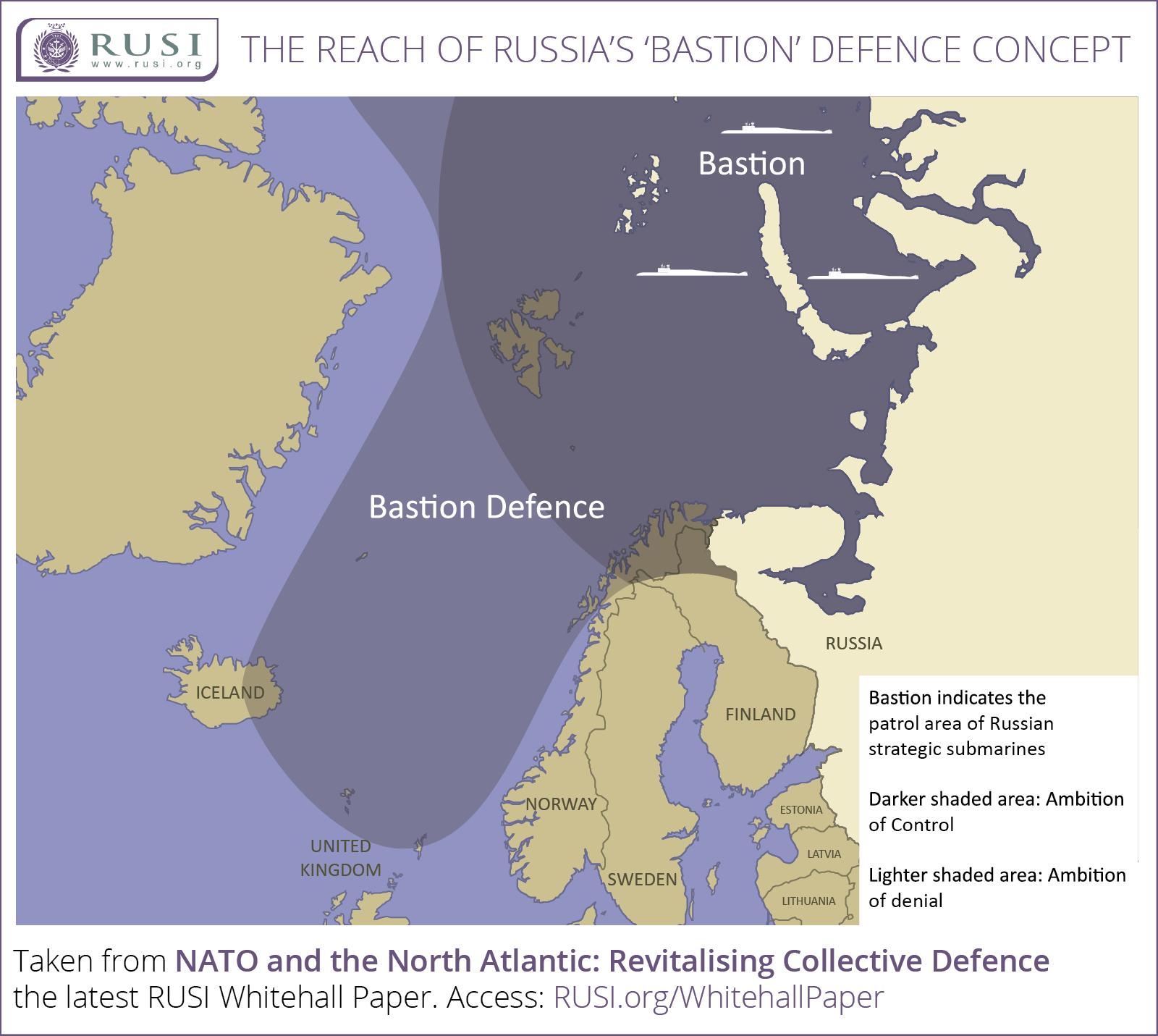
For this reason, securing the Arctic region and the Nordic countries is directly linked to the United States’ own national security. Through these areas, the U.S. is able to monitor and constrain Russian nuclear submarine activity, ensure early warning of potential missile launches, and prevent the strategic balance in the Atlantic from shifting closer to American shores.
From Russia’s perspective, the Arctic—especially the so-called “bastion” defense zone—must remain its strategic backyard: an area free from external military intrusion, where its nuclear submarines can operate with minimal detection, surveillance, or threat.
This context also helps explain the internationally controversial remarks by Donald Trump about purchasing or taking control of Greenland from Denmark. These statements were not merely about an unusual real estate deal, but reflected a broader strategic objective: strengthening the United States’ position in the Arctic, improving its ability to monitor northern sea lanes and missile trajectories, and limiting Russia’s operational freedom in a region central to its nuclear deterrent.
In other words, among all European regions, the Nordic countries may represent the most critical strategic defensive zone for the United States. In the event of a nuclear conflict, intercontinental ballistic missiles would travel the shortest route over the polar region. Control of this northern corridor would determine how quickly a threat is detected, how effectively it can be countered, and how close adversarial strategic systems could operate to U.S. territory.
Much like during World War II, when Finland, Norway, and Eastern European countries found themselves caught between the spheres of influence of Adolf Hitler and Joseph Stalin, the Nordic region today risks once again being drawn into the gravitational pull of great-power rivalry between the United States and Russia.
During the Winter War, Stalin’s primary geopolitical objective was to secure Leningrad by pushing the Soviet border further away from the city. At the same time, it reflected a broader ambition to expand Soviet influence in the Baltic region and to prevent hostile powers from gaining a foothold in Finland.
Just months earlier, in the Molotov–Ribbentrop Pact, Hitler and Stalin had agreed to assign Finland—along with Estonia, Latvia, and eastern Poland—to the Soviet sphere of influence.
Today, Vladimir Putin appears to be guided by a similar sphere-of-influence logic. This time, however, the issue is not merely a buffer zone around a single city, but a broader effort to secure the regions most critical to Russia’s nuclear deterrent—above all, the Arctic bastion—from Western surveillance and military pressure.
The Nordic countries are widely regarded as among the safest and most peaceful in the world, consistently ranking at the top of UN happiness indexes. Yet beneath this calm surface lies a genuine geopolitical pressure cooker—one that, in some ways, resembles the Balkans before World War I.
This imagery echoes the words of the prophet Jeremiah:
“The word of the Lord came to me again: ‘What do you see?’
‘I see a boiling pot,’ I answered, ‘tilting away from the north.’
The Lord said to me, ‘From the north disaster will be poured out on all who live in the land.’”
— Jeremiah 1:13–14
From the perspective of Jerusalem, the Kola Peninsula, Finland, and Northern Norway lie almost directly to the far north. In my first book, I argued that even the Winter War may be foreshadowed in the Book of Daniel.
In chapter 8 of Book of Daniel, a vision describes a battle between a goat and a ram with two horns. I demonstrated—through historical parallels—that this vision aligns not only with the ancient Persian wars and the conquests of Alexander the Great, but also with the Byzantine–Sassanid wars a millennium later, and ultimately with the Eastern Front of World War II.
The vision describes the ram—corresponding to the bear in chapter 7 (the bear being widely associated with Russia)—as pushing “westward, northward, and southward; no beast could stand before it, and none could rescue from its power. It did as it pleased and became great.”
This is precisely what occurred in the early years of World War II, when the Soviet Union pushed north by attacking Finland in the Winter War (1939–40), and west and south by occupying the Baltic states, eastern Poland, and Bessarabia. In this framework, the directions are defined from Poland—not Jerusalem—which at the time was home to the world’s largest Jewish diaspora community.
Daniel then saw the goat coming “from the west, crossing the whole earth without touching the ground, and the goat had a prominent horn between its eyes. It came toward the two-horned ram… and charged at it in great rage.”
The goat—corresponding to the leopard in chapter 7 (often associated with Germany)—can be understood here as referring to Nazi Germany’s blitzkrieg from the west of Poland, culminating in its assault on the ram, the Soviet Union, in Operation Barbarossa. The Continuation War was also tied to this conflict, as Finland fought alongside Nazi Germany against the Soviet Union in an effort to reclaim territories lost in the Winter War.
The Eastern Front of World War II also witnessed the greatest tragedy in Jewish history: the Holocaust, in which six million European Jews were murdered in concentration camps.
Finally, Daniel describes how “the goat became very great, but at the height of its power the large horn was broken, and in its place four prominent horns grew up toward the four winds of heaven.”
After rising to dominate much of Europe, Germany was ultimately defeated by the Allies. Adolf Hitler took his own life—the great horn was broken—and in its place emerged “four prominent horns,” as the four victorious powers—the United States, the Soviet Union, the United Kingdom, and France—divided Germany and Berlin into four occupation zones.
In the end, Finland was the only country assigned to the Soviet sphere of influence under the Molotov–Ribbentrop Pact that did not fall under communist rule after the war.
This is often attributed to Finnish sisu—our resilience and refusal to surrender. Yet I firmly believe that it was God Himself who preserved our nation and spared it from the tyranny of communism, because at that time we still feared Him.
This is powerfully reflected in the prayer of Kyösti Kallio, written at the outbreak of the Winter War:
Heavenly Father, look with mercy upon our people.
You have created them, and You love them.
You see that they are in the gravest danger.
Therefore we pray to You, O Lord, help us in our distress
and do not let us perish.Grant us repentance from the paths of sin and lawlessness
that lead our people to destruction.
Lord, have mercy on us.Lord Jesus Christ, without You we are powerless
against the destructive forces that sweep over our nation
and poison it.Lord, on the cross of Golgotha You have overcome the powers of darkness.
They must also give way today, because we exalt Your name
above them.Help us, through Your Holy Spirit, to take up the struggle
against sin in our own lives, and to endure to the end.Fill us with Your love, that we may become obedient
to Your commandments.Lord Jesus Christ, through You we can do all things.
This we believe.Have mercy on us. Amen.
I fear that the Guardian of our nation will no longer stand watch over us unless we return to our sacred roots and once again learn to honor His name—the sign of the eternal covenant that we still bear in our blue and white flag.
 Author & blogger Samuel Tuominen’s archives
Leave a comment