READING TIME: 24 MINUTES
I published my last article on the last day of the Hebrew festival Sukkot titled Will Israel and Saudi Arabia soon conclude a historic peace treaty that will seal the current status quo on the Temple Mount and allow the Jews to build a third temple? The next day, tragedy struck Israel when the terrorist organization Hamas, which governs Gaza, carried out the bloodiest terrorist attack in the country’s history, resulting in the deaths of over a thousand Israelis and the kidnapping of 150 civilians as hostages by Hamas in Gaza. This modern-day pogrom has been described as the worst anti-Jewish massacre since the Holocaust and “Israel’s September 11th.” This description is quite accurate, as Hamas is not some national resistance organization fighting for the rights of Palestinians, but a Salafist Islamist group whose ultimate goal is the destruction of Israel and the annihilation of all Jews from the face of the Earth.
LISTEN TO THE ARTICLE
Content
- World War III?
- Conspiracy Theories
- Land for Peace
- State sponsors of terrorism.
- President Trump, Jared Kushner, and MBS
- The aimed collapse of the Israel-Saudi peace
- Biblical war?
- Conclusion
Hamas terrorists managed to surprise the Israeli defense on October 7th, during the Sabbath, by simultaneously firing thousands of rockets into Israeli cities and breaking through the security fences of Gaza to infiltrate nearby Israeli villages. They proceeded to massacre civilians of all ages in their homes and cars. In their meticulously planned operation, the terrorists also employed gliders and landed them at a popular open-air concert, where they started shooting at participants from around the world, first subjecting women to rape and then shamelessly parading the almost naked body of 22-year-old German tattoo artist Shani Louk on the back of a truck, as if it were a trophy of their successful terrorist attack (although the girl’s mother claims she is still alive, albeit in critical condition, at a hospital in Gaza).
A video released by the Israel Defense Forces shows the terrorists indiscriminately firing at outdoor portable toilets, whether or not they were occupied. The terrorists also broke into nearby Jewish homes in the villages, and proudly filmed themselves holding crying children hostage while their parents lay dead in the next room. In a heart-wrenching video, a father of a kidnapped little girl, tears streaming down his face, told a CNN reporter how he shouted “Yes!” upon hearing that his daughter had been found dead, as the alternative would likely be even worse than death. The terrorists have threatened to film the execution of hostages if Israel continues to bombard Gaza. When some social media influencers questioned reports of Hamas massacring Jewish babies, the Israeli government shared horrific images of these atrocities on their official Twitter or X account.
When it comes to PR war, Hamas has often succeeded winning Israel when the liberal Western mainstream media acted as a mouthpiece for Hamas propaganda. However, in the era of social media, terrorists find it more challenging to spread their anti-Israel lies. And this time, Hamas seems to have taken off its mask once and for all, filming its atrocities against civilians as shamelessly as ISIS. In this regard, many have argued that Hamas is even worse than the Nazis, as the Nazis at least attempted to conceal their crimes against Jews, rather than proudly showcasing them to the world.
While in the world’s capitals people have gathered to sing “Hatikvah” and express solidarity with Israel, there were also pro-Palestinian demonstrations held across the globe, where participants celebrated Hamas’ brutal terrorist attacks on Jews. In Sydney, protesters chanted “gas the Jews!” This incident serves as the latest proof that the anti-Zionism, more prevalent among leftists and Muslims, is merely a cover for anti-Semitism, a realization that European heads of state have only recently begun to comprehend. Consequently, they have been forced to restrict or, in Macron’s France, completely ban demonstrations supporting Hamas.
World War III?
Israeli Prime Minister Benjamin Netanyahu said on October 10th: “We have only just begun the strikes against Hamas. What we do to our enemies in the coming days will be remembered for generations.” In previous wars between Israel and Gaza, the Israeli government mainly focused on containing Hamas’ rocket terrorism against Israel and conducting surgical airstrikes in Gaza to destroy Hamas’ terror infrastructure. However, this time, Netanyahu has vowed to completely eliminate Hamas’ power from Gaza and the world. As I write this, Israel is preparing an attack on northern Gaza from the air, sea, and land, and has already informed the civilians in Gaza where to evacuate for their upcoming military operation. The conflict could soon escalate throughout the entire Middle East, as both Hamas in Gaza and Hezbollah in Lebanon are proxies funded and controlled by Iran. Through these proxies, the theocratic ruler of Iran, Ayatollah Khamenei, is indirectly waging war against Israel.
Iran’s Foreign Minister, Hossein Amirabdollahian, stated yesterday that an Israeli ground invasion of Gaza would force Iran’s intervention, leading to an all-out war between the two countries. And since the Syrian dictator, Bashar al-Assad, who barely survived a civil war, is also an ally of the Iran-Hamas-Hezbollah axis, Israel could find itself at war on three different fronts: south, north, and east. This could potentially draw the superpowers into the conflict, as Israel is the United States’ key ally in the Middle East, while Iran and Syria are allies of Putin’s Russia. With the ongoing conflict in Ukraine, US-Russia relations are already tense enough to lead to the World War III. A new proxy war in the Middle East would hardly ease any tensions. So, are we already witnessing the events prophesied in the book of Ezekiel, chapters 38-39? Or the events of Psalm 83? Or the events of Zechariah 12 and Isaiah 17? I will address these questions at the end of the article.
Conspiracy Theories
Just as important as contemplating and speculating on where a historical event might lead is understanding why that event originated in the first place. In my social media circle, I have many friends who are sensitive to seeing conspiracies here and there. And I don’t blame them because my own attitude towards so-called “conspiracy theories” has always been very open, even though I am generally skeptical of all information, including conspiracy theories. As Elon Musk has often said, we need more conspiracy theories because conspiracy theories have proven to be right much more often than they are wrong. But too often, conspiracy theories are also a source of disinformation on social media. Their popularity can be explained by people’s growing distrust of mainstream media narratives, and often they are simply a symptom of our deeper psychological need to find reasons for the crises that shake the whole world, and which the shallow and often one-sided mainstream media does not always provide us.
We have been lulled into believing that things just happen without any particular reason or explanation. Covid-19 just happened to break out from the same Chinese village where Chinese scientists conducted unethical experiments on coronaviruses funded by the US health agency. The war in Ukraine just happened to break out under President Biden, even though Trump was supposed to be Putin’s puppet and Biden the man Putin was afraid of. A historic peace agreement just happened to emerge between the nations of the Middle East when Trump was in power, but now, under Biden’s leadership, the region happens to be threatened by a new regional war. Similarly, under President Obama and Vice President Biden, the power vacuum in Iraq happened to be filled by the Islamic State of Iraq and Syria (ISIS) caliphate. Nothing to do with anything. Things just happen by chance. This is how many uncritical followers of the mainstream media think, chanting robotically liberal credos: “Orange man bad,” “I support the current thing.”
To counter the chaos and randomness of this worldview, we don’t necessarily need to rely on a multi-tentacled conspiracy narrative where everything happens as a result of some masterful conspiracy where some all-powerful group controls every single event behind the scenes, like a puppet master in scripted play of a puppet theater. We can also explain the causality between events in the light of history, geopolitics, or differences in political philosophies. When pondering the root causes of such tragedies, we can, of course, always go back to Adam’s original sin and understand that the moral teachings of Jesus Christ and His atoning work on the cross at Golgotha are the only answer to overcoming the evil residing in the human heart. We can also trace their causes to the violent teachings of Prophet Muhammad in the holy book of Muslims, the Quran (Surah 9:5), and in the Islamic traditions known as Hadith. But if we are looking for these causes in the light of more recent history, we don’t have to go further back than 2005.
Land for Peace
Year 2005 is a good starting point for understanding the historical background of the latest conflict in the Middle East, as it was the year when Israel withdrew from Gaza under the government of Ariel Sharon, following the second Palestinian Intifada initiated by Yasser Arafat. Israel was led to believe, under the leadership of the George W. Bush administration, that this would ensure peace for Israel. On April 14, 2004, President Bush stated the following to the Israeli government:
On June 24, 2002, I laid out a vision to make this goal a reality. We then drafted the road map as the route to get us there. The heart of this vision is the responsibility of all parties — of Israel, of the Palestinian people, of the Arab states — to fight terror, to embrace democracy and reform, and to take the necessary steps for peace. Today, the Prime Minister told me of his decision to take such a step. Israel plans to remove certain military installations and all settlements from Gaza, and certain military installations and settlements from the West Bank.
These are historic and courageous actions. If all parties choose to embrace this moment they can open the door to progress and put an end to one of the world’s longest running conflicts… I commend Prime Minister Sharon for his bold and courageous decision to withdraw from Gaza and parts of the West Bank. I call on the Palestinians and their Arab neighbors to match that boldness and that courage. All of us must show the wisdom and the will to bring lasting peace to that region.
Among the Christian right of the United States, otherwise sympathetic to Bush’s government, the president’s peace initiative was strongly criticized because Christian Zionists believe that God has not given permission to gentile nations to divide the land that He has given as an inheritance to Israel (Joel 3:2). Although among more “moderate” conservatives such thinking was considered extremist religious fervor that hindered the peace process, history has shown that Christian Zionists were right and the Israel’s land dividers were wrong. Israel’s withdrawal from the lands it occupied in defensive wars against the Arabs has not brought peace to the Middle East in any other cases except for the 1978 Camp David peace agreement, where Israel withdrew from Sinai in exchange for peace with Egypt. While it is the duty of Christians to pray for peace in Jerusalem (Psalm 122:6), Christians also understand that no lasting peace can be built on falsehood.
The presidents, prime ministers, kings, and princes of this world are trying to create world peace on the basis of lies because their decisions are not guided by love for the truth and God’s prophetic Word, which is like a shining lamp in the darkness that could illuminate their decisions in the right direction (2 Peter 1:19). The intentions of Bush and Sharon to achieve peace may have been sincere, but it failed because the Arab side, including the Arab population of Gaza, did not uphold their part of the agreement. Instead of “fighting against terrorism and embracing democracy and reforms,” the Gazan Arabs elected Hamas to power in the 2006 parliamentary elections, which turned out to be the last in the country. According to the Pew Research Center, at that time, 62% of Palestinians supported Hamas, even though the organization’s 1988 charter aimed at the destruction of the Jewish state, not peaceful coexistence with them.
Immediately after coming to power, Hamas began to implement this goal by launching hundreds of randomly targeted Qassam rockets into the midst of Israel’s civilian population. These actions have led to significant retaliatory measures by the IDF, resulting in a much higher death toll among Palestinians than Israelis. This is primarily due to Israel’s missile defense system, Iron Dome, successfully intercepting the majority of Hamas’ rockets (although the system failed during the intense rocket barrage on October 7). Additionally, Hamas terrorists have a habit of using their own population as human shields and deliberately placing their missiles and weapons arsenals within civilian infrastructure such as schools and hospitals. Then, they have shifted to an information warfare, wailing to the Western “journalists” how Israel is ruthlessly killing innocent Gazan civilians. In reality, the IDF has done everything possible to spare civilian lives by providing advance warning of impending bombings.
Despite the fact that Hamas has done very little to improve the living conditions for the population in Gaza and has used almost all of the foreign aid flowing into Gaza to acquire weapons to kill Israeli civilians, the terrorist organization had over 70% support in Gaza in 2021. According to a poll conducted in 2022, 84% of Palestinians in Gaza supported militant groups or their establishment against Israel, while in the West Bank, that number was 65%. The Palestinians’ hatred towards Israel, instead of their own corrupt leaders, can largely be attributed to the fact that they are taught to hate Jews from an early age through Palestinian children’s programs, their parents, and the radical Islamic religious clergy.
Although I sometimes use the term Palestinians, Palestinians are simply Arabs living in the territory of Israel who settled there during the Arab conquests of the 6th century. There has never been such a nation as Palestine. The name “Palestine” is derived from the Biblical word “Philistia”, which was a Canaanite people who fought against ancient Israel in the land of Canaan, which is now the territory of Israel. In its attempts to bury the Jewish history of the region, the Roman Empire renamed Judea as Syria-Palestine in 135 AD.
State sponsors of terrorism.
The Islamic terrorism and anti-Semitism that have fueled wars and violence in the Middle East for decades could not have flourished without the support of state sponsors. Currently, the biggest supporter of terrorism in the region is Putin’s ally, Iran, which funds Hezbollah, Hamas, and the Palestinian Islamic Jihad.
However, it is important to understand that Iran represents Shiite Muslims in the Middle East. This is why Sunni terrorist groups like Al-Qaeda and ISIS were at war with Iran and its allies, just as they were at war with Israel and the West. In the past, Al-Qaeda and ISIS were funded and ideologically supported by US allies in the Middle East such as Saudi Arabia, Qatar, and Turkey. While this knowledge was often reluctantly acknowledged by the Western mainstream liberal media, the British newspaper The Independent reported on October 15, 2016: “We finally know what Hillary Clinton knew all along – US allies Saudi Arabia and Qatar are funding ISIS. There is a bizarre discontinuity between what the Obama administration knew about the jihadis and what they would say in public.”
The geopolitical and religious complexity in the Middle East can be so confusing, that readers may struggle to comprehend who hates whom and why. Exploiting this chaos, propagandists who spread hatred against Israel and the Jews have spread anti-Semitic conspiracy theories claiming that the Israeli government and Mossad were involved in the September 11 terrorist attacks or in the creation/funding of ISIS. Such conspiracy theories make little sense since Islamist terror groups that originated from Egypt’s Muslim Brotherhood hate Zionists and everything that Israel represents in that region. When evaluating conspiracy theories, it is often wise to use common sense to assess their credibility and likelihood. However, these theories do not emerge out of thin air. It was also labeled a conspiracy theory that America’s Arab allies would be involved in ISIS’s rise to power until leaked emails from US Secretary of State Hillary Clinton, disclosed by WikiLeaks, confirmed its truth.
I quoted the following excerpt from Wikipedia in my blog post on July 26, 2016: “Academics, journalists, and several Heads of State have stated that Turkey actively collaborates with ISIS by funding it, supplying weapons, allowing fighters to move freely in and out of Turkey, and providing healthcare to injured ISIS fighters. It has also been alleged that Turkey purchases oil from ISIS on the black market and smuggles weapons to ISIS fighters.” Later, Turkey’s Islamist President Recep Tayyip Erdogan, who often lashes out at Israel and the West, participated in a Western-backed military operation against ISIS. However, Iran’s proxy Hezbollah claimed that Turkey’s interference in the Syrian civil war was just an excuse to expand its influence in the Middle East. A representative of the Kurds also stated that Turkey supported ISIS and bombed its enemies in northern Syria.
Former Director of the Defense Intelligence Agency (DIA) Michael Flynn, who first served in the Obama administration and later in the Trump administration as National Security Advisor, publicly admitted that the Obama administration deliberately turned a blind eye to the support provided by their allies, Saudi Arabia, Qatar, and Turkey, to Islamist militants in Syria and Iraq. These militants were responsible for targeting Christians in the Middle East and burning political prisoners alive. The overthrow of Syrian dictator Bashar al-Assad was a shared interest between the United States and its Middle Eastern allies, making the war of Syrian and Iraqi Islamist militants against the Damascus government a beneficial situation for them. At the same time, Russia also intervened in the Syrian civil war to support Assad’s regime. In my blog post from July 2016, I wrote:
The ongoing conflict in the Middle East, specifically the rise of ISIS and their battles against Iraq’s Shia population and Iran, is, in reality, a proxy war between the United States and Russia, tied to the Syrian civil war. It is a fight for control over the Middle East, where each superpower seeks to secure their interests in dominating 80% of the world’s oil reserves. These actions by the superpowers are not about eradicating terrorism, but about global domination. The late British historian Albert Hourani, who specialized in Middle Eastern affairs, once said, “He who controls the Middle East controls the world; and those who have an interest in the world should be concerned about the Middle East.”
Some people may still naively think that the Syrian civil war was solely about the spontaneous uprising of a democracy-seeking people against their oppressive government, which the US and the West wanted to support morally. However, several Middle East relations academics, geopolitical experts, and investigative journalists have stated that it was much more connected to the control of world energy supplies. In 2009, the US ally Qatar, which continues to finance Hamas, published its plan to build a natural gas pipeline that would supply energy from the Persian Gulf to Europe through Saudi Arabia, Jordan, Syria, and Turkey. The only problem was that there was Russia’s ally, Syria, in the middle of the supply line, which did not seem to approve of Qatar’s plans. Why? Because it would have threatened the dominance of Russia’s state gas company, Gazprom, which produced 80% of the gas sold to Europe. Gazprom’s monopoly on Europe’s energy needs has been a great geopolitical advantage to Putin, as “he who pays the piper calls the tune.”
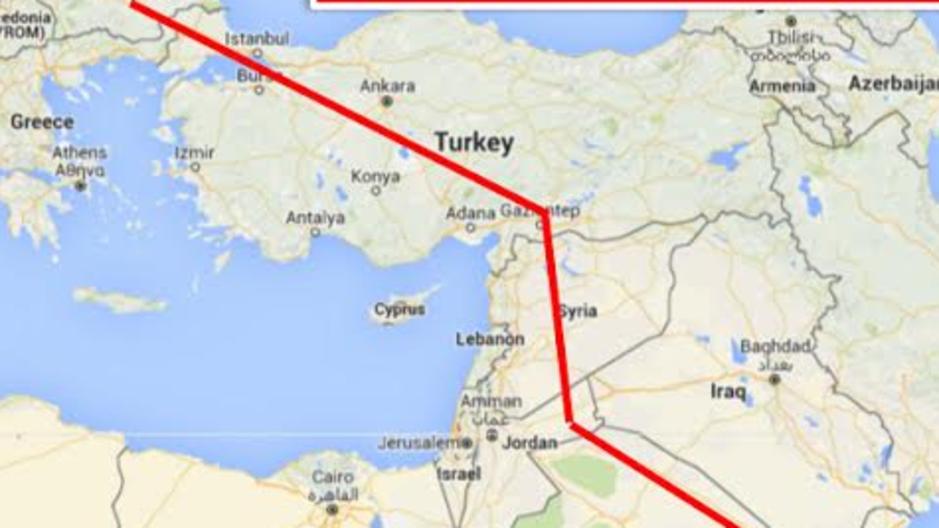
Therefore, Putin pressured his ally Bashar al-Assad to put a stop to Qatar’s plans. Meanwhile, a civil war erupted in Syria as Qatar and the Saudi government financed rebels and Islamists fight on Assad. If Assad had been successfully sidelined at the end of the bloody civil war, the West hoped to establish its own puppet government in Syria, which would enable Qatar’s plans and free Europe from the Kremlin’s energy grip. Back in 2007, Pulitzer Prize-winning journalist Seymour Hersh revealed that the long-term strategy of the US-Saudi coalition was to undermine the growing influence of Shia Iran by supporting Sunni extremist groups in Syria. Saudi Arabia’s national security advisor, Prince Bandar bin Sultan, who, according to US intelligence, had connections to the hijackers of the September 11 terror attacks, assured the US government, “We keep our eyes firmly on the fundamentalists. We created this movement [Al-Qaeda] and we can also control it.” According to Hersh, Saudi Arabia’s foreign policy goals included four key points:
- To ensure that Israel is assured that the United States, Saudi Arabia, and other Sunni states share its concerns about Iran.
- Saudi Arabia would encourage Hamas to refrain from aggression against Israel and initiate negotiations with Fatah. The Saudis believe that greater stability in the Israel-Palestine conflict would reduce the influence of the Iran-Syria-Hezbollah coalition in the region.
- The US administration should work with Sunni states in the Middle East to counter the threat from Iran.
- The Saudi government, with Washington’s approval, would provide funding and logistical support to weaken the Assad regime. As part of this strategy, the Saudi monarchy would finance and assist Sunni extremists operating within Syria who are opposed to the Assad regime, including al-Qaeda.
President Trump, Jared Kushner, and MBS
Seven years later, ISIS was born out of Al-Qaeda in Iraq, while the Obama administration quietly approved its Arab allies support for terrorists, as General Flynn revealed. Trump’s unexpected rise to power shook things up and reshuffled the deck. Michael Flynn became a strong political ally of President Trump partly because Trump exposed the previous administration’s immoral and irresponsible Middle East policy, blaming President Obama and Hillary Clinton as the true creators of ISIS.
With its strong nationalist “America First” policy and economic nationalism, America, under President Trump’s leadership, achieved energy independence for the first time in over 60 years, meaning the country’s energy production surpassed its consumption. This had immediate implications for the country’s foreign policy as it reduced America’s need to intervene in oil conflicts in the Middle East to secure its energy supply. President Trump had greater freedom to stand with Israel’s interests and recognize Jerusalem as its undivided capital, without fear of backlash from Arab allies and the OPEC’s threats of oil production cuts.
Many Trump’s supporters and enemies were equally surprised by his “flip-flop” regarding Saudi Arabia. Prior to the 2016 presidential elections, he accused the kingdom of being involved in the September 11 terrorist attacks and the rise of ISIS. However, in 2017, he chose Saudi Arabia as his first state visit destination and signed a $350 billion arms deal with the kingdom. Yesterday I listened to Jared Kushner’s, President Trump’s Jewish son-in-law and intermediary for his Middle East peace plan, an almost four-hour interview on Lex Fridman’s podcast. The first part of the interview was recorded after the events of October 7th, and the second part was recorded a few days before the tragedy occurred. The interview provides a fascinating window into this rather sympathetic and intelligent young man’s foreign policy perspectives and why he believes President Trump’s foreign policy has been so successful and Biden’s foreign policy so devastating.
Kushner states that he is 100% convinced that under President Trump’s leadership, there would not have been a war in Ukraine or Hamas attacks on Israel. One interesting thing I have noticed in public statements from Trump administration officials like Jared Kushner is that they do not hesitate to condemn Iran for its support of Islamic terrorism. However, when it comes to the US’s Arab allies in the Persian Gulf, they remain surprisingly silent, even though there is already quite public information about Saudi Arabia, Qatar, and Turkey’s support for Islamist terrorist organizations, which Trump himself made a fuss about during the 2016 elections. Perhaps this is a kind of “diplomatic diversion” where inconvenient facts for the US are deliberately downplayed.
But unlike the Obama administration, which turned a blind eye to its Arab allies’ support for Islamists and Sunni terrorists, President Trump made it very clear to the Arabs during his first visit to the Middle East that if they wanted to continue their special relationship with the United States, they had better stop their financial, ideological and logistical support for terrorism. Trump tweeted in June 2017 after his visit to Saudi Arabia: “So good to see the Saudi Arabia visit with the King and 50 [arab] countries already paying off. They said they would take a hard line on funding extremism, and all reference was pointing to Qatar. Perhaps this will be the beginning of the end to the horror of terrorism!”
Jared Kushner reveals in an interview on the Fridaman podcast that it was actually the Saudi government, particularly its reform-minded Crown Prince Mohammed Bin Salman, who approached the Trump administration with an offer. The offer was that if President Trump made his first state visit to Saudi Arabia and reaffirmed the continuity of the special relationship between the two countries, the Saudis would promise to cease funding terrorism. This indicates that the existence of the Saudi royal family was highly dependent on U.S. support, more so than the U.S. was reliant on Saudi support. Jared Kushner, the Jew, and MBS, the Arab, formed a friendship – which in itself is a miracle – and they began talking on the phone daily about their new vision for the future of the Middle East. This unique friendship also sowed the seeds for the historic Abraham Accords in 2020 and the even more historic normalization of relations between Saudi Arabia and Israel. According to Benjamin Netanyahu, as he proudly proclaimed in his September speech at the UN, this normalization could have happened before the end of this year.
The aimed collapse of the Israel-Saudi peace
What happened then? Why did war break out instead of peace? Although Paul speaks here of the rapture of the church, the events bring to mind 1 Thessalonians 5:3, “While they are saying, ‘Peace and safety!’ then sudden destruction will come upon them like labor pains upon a pregnant woman, and they will not escape.” The timing of Hamas’ attack is not a coincidence. Firstly, the attack took place almost exactly 50 years after the outbreak of the previous major war between Israel and the Arabs, the Yom Kippur War, on October 6, 1973. Saturday, October 7, was the Sabbath in Israel, following the joyous Feast of Tabernacles. Instead of joy, the festival ended in tears of sorrow.
US Secretary of State Antony Blinken had planned to travel to Israel and Saudi Arabia in the third week of October to discuss the normalization of Israel-Saudi relations. As the negotiations, which have been going on publicly since at least January 2023, progressed, it became very clear to many observers in the region that the Iran-Hezbollah-Hamas axis opposed the normalization of Israel and Saudi Arabia’s relations. Normalization of relations would also mean recognizing the legitimacy of the State of Israel, by the nation where Islam originated and which governs the two most important Islamic pilgrimage sites, Mecca and Medina. This would reduce the pressure on Israel from the Arab world and the international community. As I mentioned in my blog on October 5th:
By first negotiating with the “99% [Arab world]”, Netanyahu’s goal is to eventually bring in that “1% [Palestinians]” as well. Even though Palestinians may currently oppose peace negotiations between Israel and Saudi Arabia (as they have opposed almost all peace initiatives since the establishment of Israel), eventually they will have to retreat from their demands because they no longer have the support of the wider Arab world or major powers.
Hamas could not allow this to happen, and therefore they launched attack on Israel even though they knew that the Israeli counterattack could potentially mean the end of their power (it would be more difficult for Saudi royal family to normalize its relations with Israel when Israel is bombing the Arab population of Gaza). Hamas leaders likely calculated that the Israeli hostages taken to Gaza, together with the military threat posed by Hezbollah, Syria, and Iran, would pose too great a risk for Netanyahu to initiate larger military operations against its power base. However, it is also possible that the attack was originally planned by Iran rather than Hamas. A report from The Wall Street Journal claimed that members of Iran’s Islamic Revolutionary Guard Corps helped Hamas in planning the attack and gave it the green light, even though the Biden administration has not been able to find evidence of direct Iranian involvement in the attack. The question of this is actually irrelevant because Iran is, in any case, Hamas’s most important ally, and Ayatollah Khamenei has openly celebrated the brutal murder of more than a thousand Jews.
Does this mean that the Abraham Accords initiated by Trump’s White House led to the recent war and that it would have inevitably happened during Trump’s presidency as well? In the interview above, Jared Kushner actually provides a good reason why this is not the case. The mistake of Biden’s White House was not in supporting the normalization of relations between Israel and Saudi Arabia, but rather in turning it into a months-long public spectacle. This gave Israel’s and America’s enemies time to consider their next move to torpedo these plans. At the same time, Biden’s administration demonstrated extreme weakness in foreign policy with his catastrophic withdrawal from Afghanistan on the 20th anniversary of the September 11 terrorist attacks, and his appeasement of Iran, where he approved a $6 billion aid to the mullahs of Iran, who fund terrorism and anti-Semitism, just weeks before Hamas launched their terror attack.
Even if none of these six billion dollars went towards financing Hamas attacks, the foreign policy signal it sent was already sufficient to encourage Hamas to attack Israel, as symbolism often matters more than cold cash in foreign policy. As Kushner points out, one of the greatest strengths of Trump’s foreign policy was its unpredictability. Trump could keep the whole world on its toes, for example, by threatening to launch a nuclear strike against North Korea, publicly at the UN and on Twitter. This nerve-racking state of uncertainty ultimately led “Rocket Man” Kim Jong-un himself to agree to peace negotiations aimed at denuclearizing his country.
I praised Netanyahu’s strong foreign policy in my previous blog post, which has led to peace with Arab nations by adhering to the Reaganite and Trumpian principle of “peace through strength” instead of appeasing Israel’s enemies. However, Netanyahu made a mistake when he prematurely publicized his peace agreement with Saudi Arabia in front of the entire world at the United Nations. MBS also made the same mistake when he revealed this during an interview with Fox News’ Bret Baier on September 20. The impatience of “Bibi” and MBS perhaps speaks more about the incompetence of Biden’s White House than those two first mentioned.
During the Baier’s interview, MBS implied that the normalization of relations depended not so much on Netanyahu, but on Biden’s White House, which slowed down the agreement with unrealistic expectations, including likely an attempt to get Palestinian President Mahmoud Abbas to sign the terms of the peace agreement. Similarly, Netanyahu stated in his UN speech that the success of the agreement would depend on President Biden’s “leadership.” Netanyahu and MBS started promoting the agreement prematurely in an attempt to inspire and encourage the Biden administration to seize the opportunity in a timely manner before it slipped through their fingers. Due to the delay of the Biden administration and the appeasement of Israel’s enemies, Israeli civilians have now become innocent victims.
Biblical war?
Geopolitics is one of my favorite topics, so I apologize for the thorough explanation of the historical background of the Israel-Hamas war. The biblical dimension of the war is another very interesting subject for reflection. The various wars of the end times in the Bible are a somewhat obscure topic even for me, in terms of how many separate wars are fought and in what order. My general understanding has been that Armageddon, which is fought at the end of the 7-year tribulation period, is a different battle from the Gog and Magog war predicted in Ezekiel chapters 38-39. But in addition to these, it seems that we also have the war mentioned in Psalm 83, where the surrounding Arab nations attack Israel. This same war appears to be connected to the war mentioned in Zechariah 12, where God will “make Jerusalem a cup that causes staggering to all the peoples around; and when the siege is against Jerusalem, it will also be against Judah. It will come about on that day that I will make Jerusalem a heavy stone for all the peoples; all who lift it will injure themselves severely. And all the nations of the earth will be gathered against it.” However, the last sentence suggests that Zechariah chapter 12 speaks of the same war as Zechariah 14, where the prophet says:
For I will gather all the nations against Jerusalem to battle, and the city will be taken, the houses plundered, the women raped, and half of the city exiled, but the rest of the people will not be eliminated from the city. Then the Lord will go forth and fight against those nations, as when He fights on a day of battle. On that day His feet will stand on the Mount of Olives, which is in front of Jerusalem on the east; and the Mount of Olives will be split in its middle from east to west forming a very large valley.
These verses speak of the actions of the Antichrist, who will gather some kind of global UN “peacekeepers” alliance against Jerusalem while desecrating the Third Temple (Daniel 8:11, 9:27, 11:31, Matthew 24:15, 2 Thessalonians 2:4, Revelation 11:2, and 12:14). Also related to this is the war between the kings of the North and South in Daniel 11. The war of Ezekiel is likely separate from these events, as Gog and all his armies will fall on the mountains of Israel (Ezekiel 39:4), while in the war described in Zechariah 14, Jerusalem will be captured and half of the city will be given to the Gentile nations. This is consistent with what the Apostle John was shown about the events of the second half of the tribulation period: “Get up and measure the temple of God and the altar, and those who worship in it. Leave out the courtyard which is outside the temple and do not measure it, because it has been given to the nations; and they will trample the holy city for forty-two months.” (Revelation 11:2).
Therefore, the Gog and Magog war would have to precede the war that will take place during the time of tribulation. Or then it could be fought during the first half of the tribulation. So, where does the war mentioned in Psalm 83 or the prophecy in Isaiah 17 fit in? The destruction of Damascus can potentially occur in any of the aforementioned wars. The Syrian capital, Damascus, is currently under the control of Bashar al-Assad, an ally of Russia and Iran. It is possible that the city’s destruction, mentioned in Ezekiel’s vision, could happen during the war involving Gog (that is most likely Russia) and its allies, including Persia (which is modern-day Iran).
Overall, the vision described in Ezekiel chapters 38-39 provides a very detailed depiction of the Islamic nations that are today the greatest enemies of teh state of Israel and who seek its destruction. Some prophecy teachers, like Amir Tsarfati who resides in the region of Armageddon, teach that the war predicted in Psalm 83 has already taken place. According to the prophecy in the Psalm, Israel’s enemies unite against it, saying:
“Come, and let’s wipe them out as a nation, So that the name of Israel will no longer be remembered.” For they have conspired together with one mind; They make a covenant against You:
The vision then mentions a number of ancient peoples and city names that could be translated into modern-day nations of Jordan, Saudi Arabia, Iraq, Syria, and Lebanon. These nations declared war against Israel in the Israel’s 1948 War of Independence. Therefore, I may agree more with Tsarfati’s teaching that the Psalm 83 war has already taken place. Israel has already made peace with many of the nations mentioned in that vision, and the normalization of Saudi-Israeli relations may have officially ended the state of war between Arabs and Israel that has lasted for over 75 years. Israel is no longer at war with Arab nations but against terrorist organizations controlled by Iran.
Conclusion
Although the war between Israel and Hamas will complicate and delay the peace process between Israel and Saudi Arabia – a goal specifically pursued by the Iran-Hezbollah-Hamas alliance with their terrorist attack against Israeli civilians – it is unlikely that Saudi Arabia would join Hamas in their war against Israel. Only time will tell which direction these developments will take and what the outcome of the war will be. Unless the war expands into the prophesied war described by the Prophet Ezekiel, it could fulfill, for example, the prophecy of Zephaniah’s Chapter 2 on the destruction of Gaza as God’s judgment on the nation that resides there:
Gather yourselves together, yes, join together, you nation without shame… Before the burning anger of the Lord comes upon you, before the day of the Lord’s anger comes upon you. Seek the Lord, all you humble of the earth who have practiced His ordinances; seek righteousness, seek humility. Perhaps you will remain hidden on the day of the Lord’s anger. For Gaza will be abandoned, and Ashkelon will become a desolation; the inhabitants of Ashdod will be driven out at noon, and Ekron will be uprooted. Woe to the inhabitants of the seacoast, the nation of the Cherethites! The word of the Lord is against you, Canaan, land of the Philistines; [Notice: The term “Palestinians” is derived from the word “Philistines,” and the ancient Philistines inhabited the current Gaza region] and I will eliminate you So that there will be no inhabitant… And the coast will be for the remnant of the house of Judah… This they will have in return for their arrogance, because they have taunted and boasted against the people of the Lord of armies.


 Author & blogger Samuel Tuominen’s archives
Leave a reply to Samuel Tuominen Cancel reply