Christian Transhumanism and the Expectation of the End Times
On Saturday, I attended a home fellowship at my older brother’s place. There were seven of us, and the meeting was relaxed and fraternal in atmosphere. We also talked about the end times. I tried to explain some of the views I discuss in my book Adam 2.0 or Beast 6.66?, but it is not always easy to present such broad theological and philosophy-of-history ideas in a short group discussion. If I explain all the background, the conversation turns into a one-man lecture. If I condense it too much, the argument can become something quite different in the listener’s mind.
For example, my brother said he disagreed with me because, as he understood it, I teach that God wants more robots in the world, whereas he hopes humanity will return closer to nature and its natural state. That is a false contrast, though. I also believe God will restore humanity to its original, pre-Fall “natural” condition. Our disagreement seems to concern what a return to that natural state ultimately means.
Contents
Is Human Creativity Unnatural?
First, it is important to define our terms before discussing any subject. By “natural,” I mean something humans have not invented or made themselves. “Unnatural” refers to something artificial—that is, developed or manufactured by human beings. As Christians, we believe nature is God’s creation. But it does not follow that everything natural in our fallen world is good, or that everything humans build is bad by definition. Nature also includes pathogens, cancer-causing mutations, and other sources of suffering.
Consider eyeglasses. If someone’s eyesight begins to fail and they get glasses, have they violated the natural order God created by using an artificial aid to correct a biological weakness? Would it be spiritually better for them to spend the rest of their life squinting and bumping into furniture simply because poor eyesight is natural? I doubt anyone wants to take the ideal of naturalness that far.
In philosophy, this kind of reasoning is called the appeal-to-nature fallacy. The fact that something is natural does not prove it is good, and the fact that something is artificial does not prove it is bad. For Christians, there is a deeper question: if human beings are created in God’s image, is not our ability to investigate, invent, and build also part of the nature God gave us? Adam was placed in Eden to work and keep the garden (Genesis 2:15), not simply to lounge in the shade of a tree. Would God have given him immense intellectual potential only so he would never need to use it?
Many people know the saying that it is permissible to use one’s reason. Galileo Galilei expressed a similar thought as early as 1615: “I do not feel obliged to believe that the same God who has given us our senses, reason, and intellect intended us to forgo their use.” This was one of the theological ideas Christians of the Scientific Revolution drew on to explain why studying nature made sense.
If the visible world was an intelligible, law-governed whole created by a rational God, and human beings were created in God’s image, then one of humanity’s tasks was to use reason to investigate creation and understand it better. That sounds self-evident today, but it was not for many centuries. In numerous ancient religions, the sun, moon, sea, and thunder were treated as divine powers. People were expected to appease them with deference and sacrifices—ducks, or in the worst cases other human beings—rather than investigate how they worked.
According to the Bible, humanity was created not only to tend gardens but also to build civilization: cities, culture, science, and art. Genesis already describes the early development of cities, music, and metalworking (Genesis 4:17–22). These are not declared sinful merely because fallen people practiced them. The same metal could be made into a plow or a murder weapon. The moral problem was not the metal, but the person using it.
The Fall did not destroy the image of God in humanity, but it corrupted and weakened our original abilities and our capacity to fulfill the purpose for which God created us. Human reason, creativity, and ability to develop culture nevertheless survived the Fall.
Christianity also does not teach that someone living in the wilderness is automatically more innocent than a city-dweller. A sinful person does not become sinless by trading a smartphone for a stone axe. For centuries, the Christian Church has spread literacy, education, and medical care. If the goal were to return humanity to an uncivilized state of nature, that would have been a strange course of action for the Church. The idea of the “noble savage” is often associated with the eighteenth-century philosopher Jean-Jacques Rousseau’s view that civilization corrupted humanity’s innocent, primitive condition. Rousseau’s anthropology still influences many reactionary movements that vilify progress and technology as the source of all evil.
Is History One Long Downhill Slide?
In communities influenced by dispensational premillennialism, history is often interpreted as a story of ever-deepening decline that Christ’s return will finally interrupt. I do not mean that all premillennialists think this way. I too believe Christ will return before the Millennium, and that the end times will include apostasy and an increase in lawlessness (Matthew 24:12; 2 Thessalonians 2:3; Revelation 19:11–20:4).
Yet Jesus also compared the Kingdom of God to a growing mustard seed and to yeast that works through the whole batch of dough (Matthew 13:31–33). Why should we view history only through the first set of prophecies and not also through these latter parables?
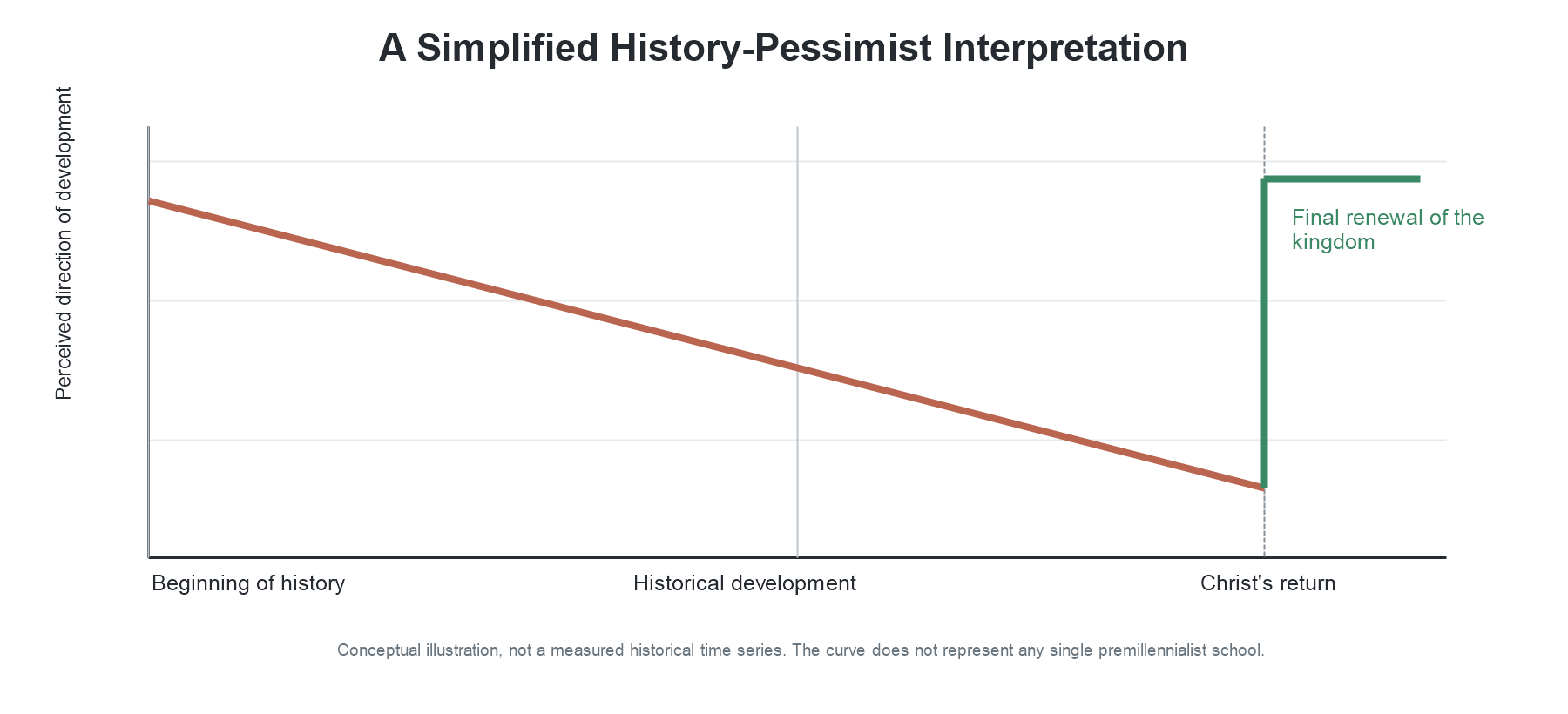
Consider the twentieth century. It saw world wars, the Holocaust, and totalitarian dictatorships, but it also brought antibiotics, computers, and countless life-saving treatments. Was it an age of decline or progress? The answer depends on what we are looking at.
I do not consider technological progress good simply because the world is now full of more sophisticated machines. Technology’s value lies not in technology itself, but in the good we can accomplish with it. As recently as the nineteenth century, a large share of children born died before reaching adulthood. With modern medicine, vaccination, antibiotics, clean water, better nutrition, and hygiene, global life expectancy rose from about 30 years in the early twentieth century to more than 70. This does not mean people normally died of old age at thirty in the past; high child mortality pulled the average down. Behind that statistical difference are very concrete human stories: parents whose children did not die of infectious diseases, children who got to grow up, and sick people whose lives were saved.
That does not mean I consider the pharmaceutical industry infallible. I did not take COVID-19 vaccines because I was suspicious of them. Conflicts of interest in the pharmaceutical industry and the safety of treatments must be open to critical scrutiny. But if medicine has sometimes promoted harmful treatments such as lobotomy, should we conclude that a dentist in the Middle Ages treated teeth more safely and painlessly than one today? Of course not. Science also makes it possible to recognize and correct earlier mistakes.
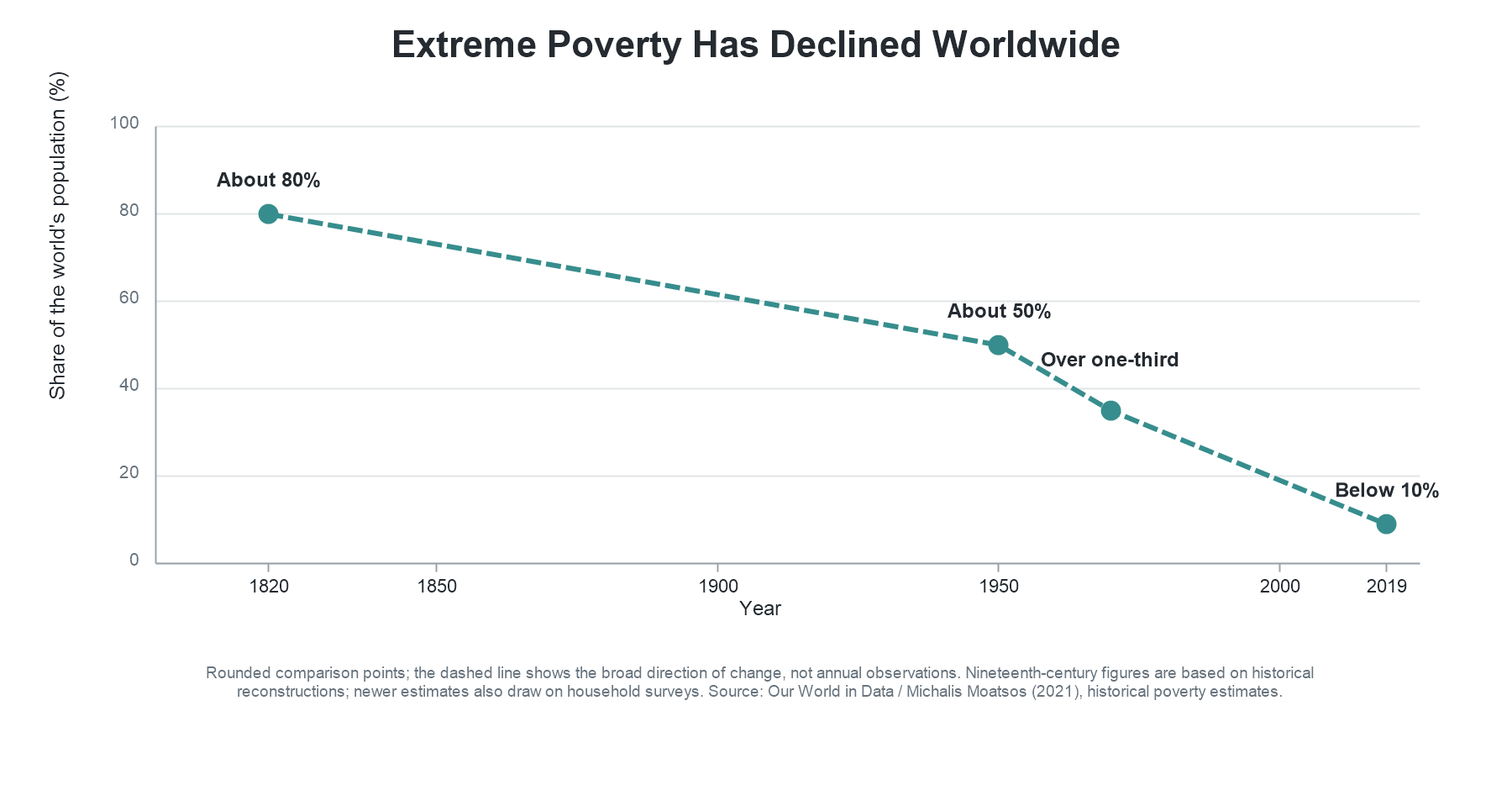
Likewise, mechanization, industrialization, and economic growth have made work easier for many people and dramatically reduced extreme poverty, even as the world’s population multiplied. This development challenges the Malthusian idea of a fixed resource pie, from which each new person’s birth leaves everyone else a smaller slice. When a child is born, the world gains not only another person to eat the pie, but also another person who may help bake it.
If we see a person primarily as a consumer of limited resources, rather than also as a producer and creator of new things, they can easily become just another mouth to feed. This kind of thinking has been used throughout history to justify even genocide. Its consequences can also be devastating to a person’s own sense of dignity. If society speaks of people mainly as economic burdens, how easily might an elderly, sick, or disabled person start to believe they are only a burden to others? At worst, they may begin to think the world would be better without them.
Material prosperity alone, of course, does not guarantee a good life. People need meaningful challenges and purposes. But it does not follow that poverty, disease, and forced labor are good in themselves. Jesus did not tell sick people to keep their illnesses so that suffering could build their character. He healed them.
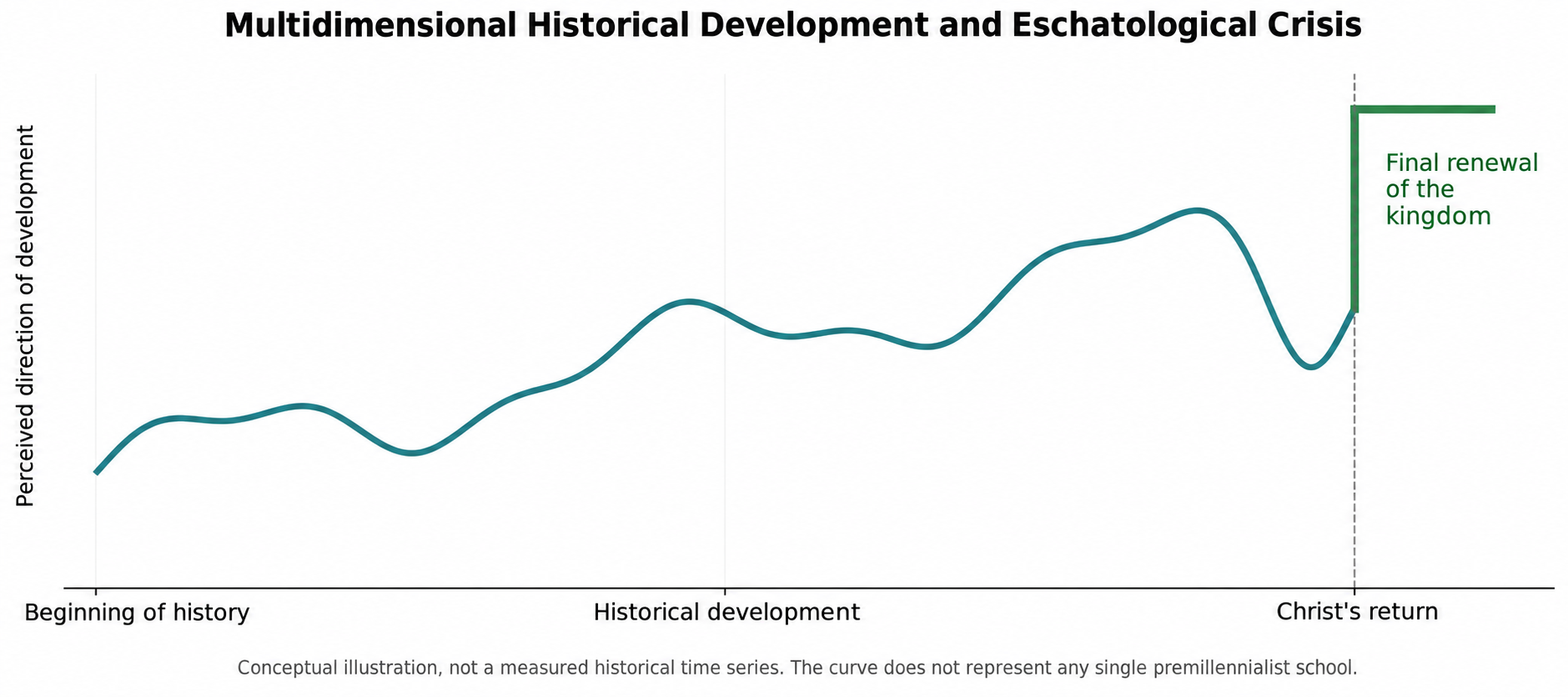
So when someone says the world is moving toward ever-greater darkness before Christ’s return, I would first ask what they mean by darkness. Humanity can make progress in medicine, technology, and living conditions while declining morally and spiritually. These trends do not exclude one another. Nor can we talk about growing spiritual apostasy by looking only at the West. Christianity may weaken in one part of the world while growing stronger in another.
What About Genetic Decline?
My brother also brought up the idea of genetic entropy, known in some creationist circles: harmful mutations, it is argued, lead to the gradual degeneration of humanity. I am a creationist myself, but that does not mean I deny the existence of natural selection or DNA repair mechanisms, or their effects on genetic variation within populations.
As someone who is not deeply versed in the subject, I can only say that the idea of genetic entropy seems compatible to me with the Christian doctrine of original sin: all people inherit, from birth, the curse brought upon all creation by Adam’s Fall (Genesis 3:17; Romans 8:22). That is why Paul said that “the whole creation has been groaning” as it awaits being “set free from its bondage to decay” and brought “into the freedom and glory of the children of God.”
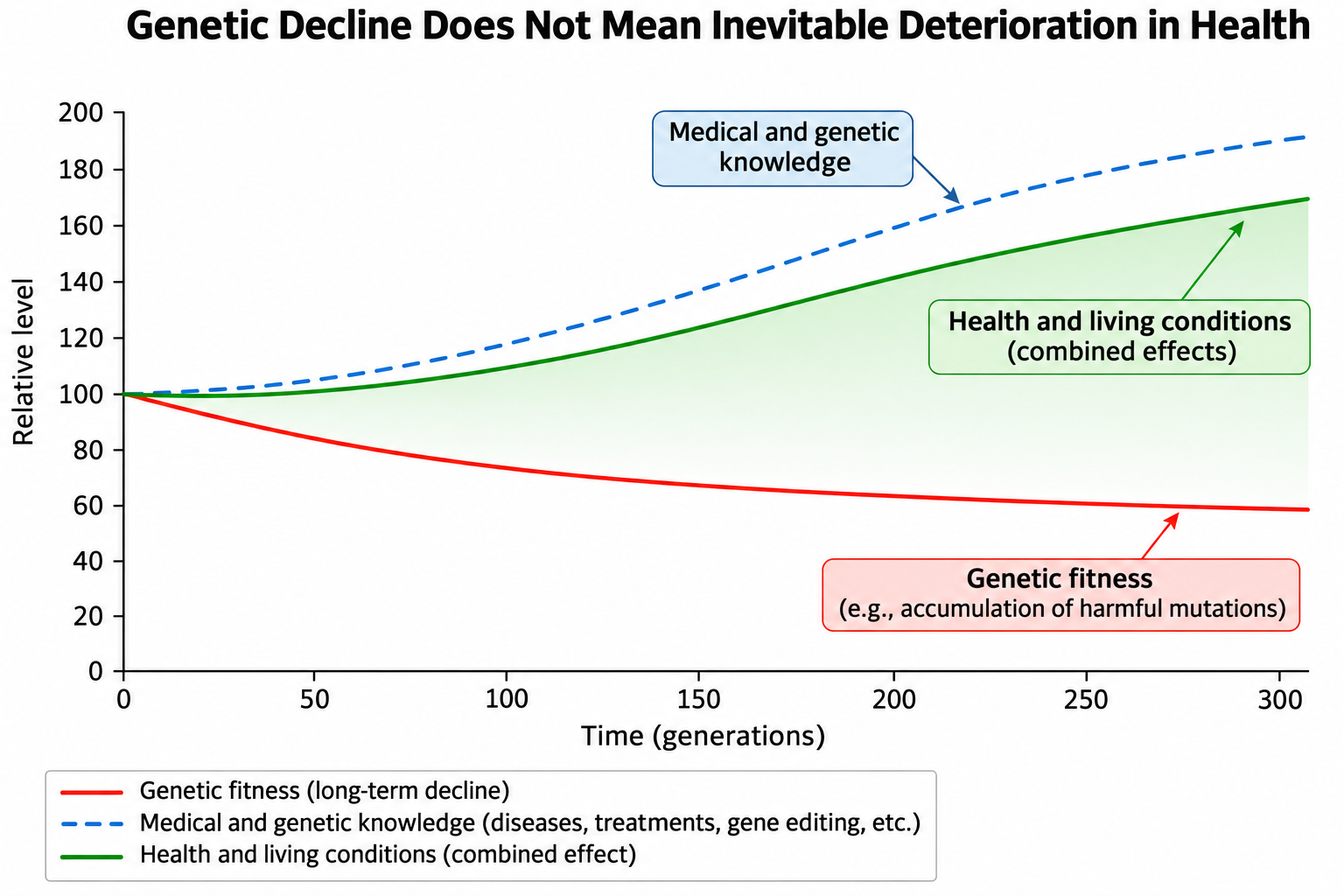
But suppose humanity does genetically degenerate over the long term. Why would that necessarily mean people’s health and living conditions must deteriorate? At the same time, humanity is learning to understand its genes, identify diseases, and develop new treatments. That growth in knowledge cannot be left out of any calculation of historical development.
Christianity’s Influence on History
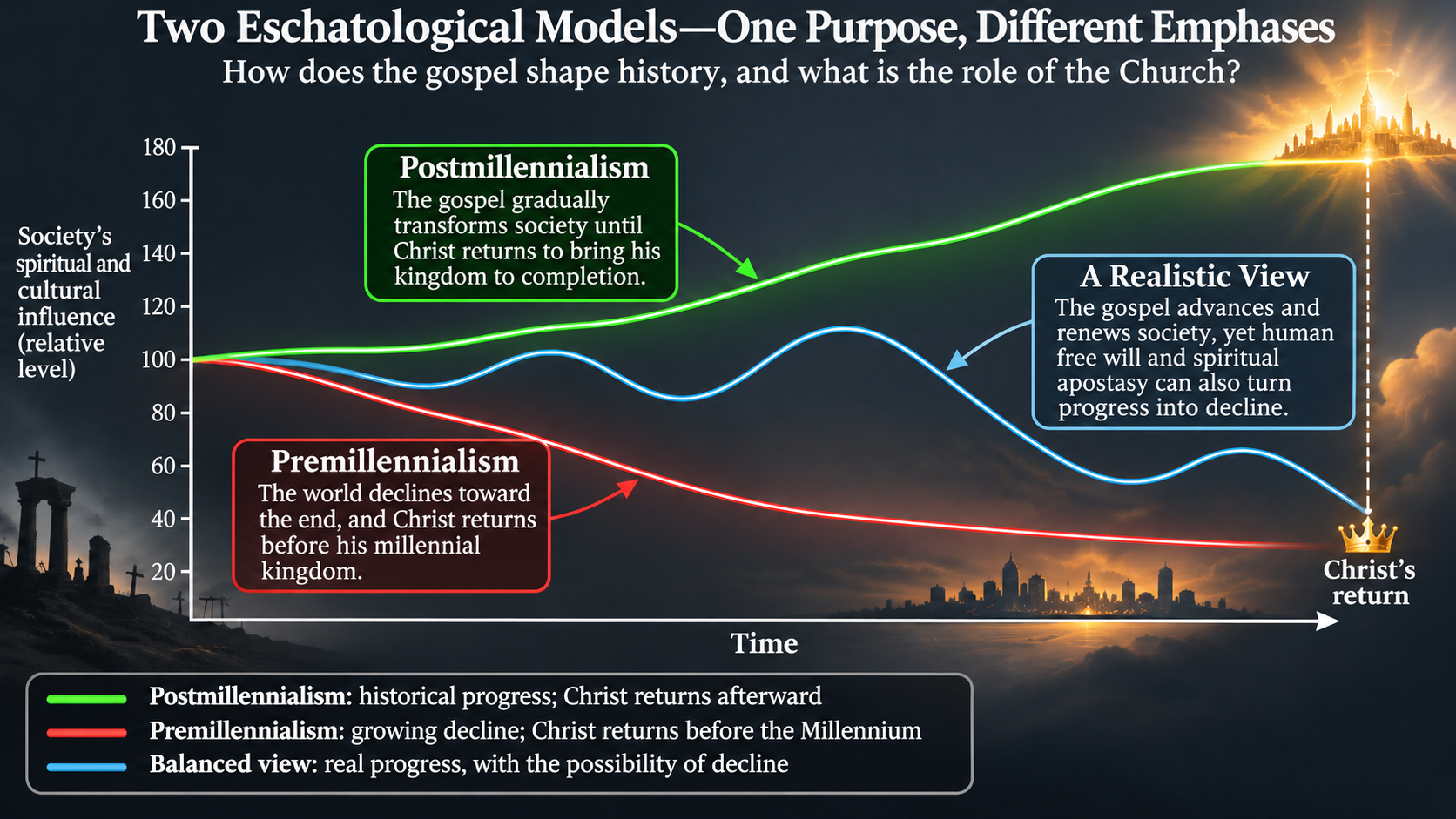
The difference between premillennialism and postmillennialism is not only about whether Christ returns before or after his Millennium. It is also about how we understand the Church’s historical mission. I consider the premillennial chronology more biblical (Revelation 19–20), but I think the postmillennial view—that the gospel has a society-renewing effect—is historically grounded.
In many premillennial interpretations, the Church is seen mainly as a remnant rescuing souls from a sinking world, while postmillennialism emphasizes the gradual advance of God’s Kingdom among the nations. The latter view strongly influenced Protestantism in the seventeenth through nineteenth centuries, while history-pessimist premillennialism later spread with dispensational futurism.
I do not fully agree with either view. The Church is not merely a lifeboat waiting for the end-times catastrophe: Jesus commanded his followers to make disciples of all nations and compared the Kingdom of God to a growing mustard seed and to yeast (Matthew 28:18–20; 13:31–33). Premillennialism underestimates the social impact of the gospel’s spread and how national revivals often lead to social progress. Postmillennialism, meanwhile, can underestimate human free will and the possibility that spiritual apostasy may turn progress into decline—progression into devolution.
A friend brought up the American New Apostolic Reformation (NAR) movement and Dominion theology. I had critically studied these currents when I was considerably younger. I have never supported prosperity theology or extreme charismatic Christianity. Although I have been an advocate of Trump’s Christian-conservative MAGA movement, I have also recently criticized militant “Christian” nationalism. I support a Dominion theology in the tradition of classical postmillennialism. That does not mean Christian nationalism in the sense meant by some far-right Christ Is King groups. The word dominion in Dominion theology comes from the authority in the creation mandate given to the first human couple:
So God created mankind in his own image, in the image of God he created them; male and female he created them. God blessed them and said to them, “Be fruitful and increase in number; fill the earth and subdue it. Have dominion over the fish in the sea and the birds in the sky and over every living creature that moves on the ground.” (Genesis 1:27–28)
Postmillennialism’s optimistic hope for the future is much older than the NAR movement. It was already influential among Protestants in the seventeenth through nineteenth centuries. Theologians such as Jonathan Edwards believed the spread of the gospel would gradually transform entire societies. This outlook inspired missionary work, the founding of schools and hospitals, aid to the poor, and opposition to slavery. Reformers did not have to wait passively for Christ’s return; even in their own day, they could work toward a world that better reflected Christian moral ideals.
Modern Western civilization did not arise in a religious vacuum. Alongside the natural sciences, the Christian worldview shaped the development of legal thought, human dignity, natural law, and political philosophy. Donald S. Lutz, who studied political writings from the founding era of the United States, found that the Bible was the most frequently cited source in his sample of writings from 1760 to 1805; Deuteronomy was the most frequently cited individual book.
Here is the irony of Christian nationalism: some who want to restore society to its Christian roots fail to recognize how those same roots also contributed to limiting state power and developing religious freedom. If a Christian may not convert a neighbor by the sword, why should a Christian king be allowed to? And if Jesus said that his Kingdom was not of this world (John 18:36), by what right would a secular ruler declare his own kingdom to be Christ’s Kingdom?
Is a Long Life Playing God?
There was one subject I did not even bring up at the home fellowship: research into slowing biological aging. I am no expert, but I have listened to many interviews with Aubrey de Grey, who studies the medical possibilities of extending healthy lifespan.
De Grey is known for arguing that aging should not be treated as an immutable law of nature, but as a biological process whose cellular and tissue damage might one day be prevented and repaired through medicine. His vision is not about discovering some mystical elixir of immortality. It is about gradually learning to repair the same kinds of damage whose accumulation leads to diseases of old age and eventually death.
I do not know whether his most optimistic predictions will ever come true. But even the basic idea behind this research raises interesting theological questions for me.
If medicine can now save someone from a heart attack, replace worn-out joints, or treat diseases our ancestors died from, why should slowing biological aging be fundamentally different? If we accept medical means of extending a person’s life from sixty to eighty years, at what point does pursuing the same goal become playing God? At eighty? At a hundred? Or only when people begin to live longer than Methuselah in the Bible?
I find it strange that many Christians are already suspicious of the idea. If a doctor saves a heart attack patient and gives them decades more life, has the doctor usurped God’s authority?
The Bible describes long life as a blessing in many places (Proverbs 3:1–2; Ephesians 6:2–3). A healthy diet and exercise are widely accepted ways of preserving life. But if a doctor in the future pursues the same goal by studying cellular aging or repairing genetic damage, at what point does it become a satanic Frankenstein project?
Genetic engineering raises real ethical questions, of course. We should address them by examining risks, human dignity, and possible abuses—not by declaring everything artificial to be unnatural. Technology itself has arisen through the study of nature and the application of natural laws. Why would understanding God’s creation better amount to rebellion against its Creator?
According to Christian creation theology, nature is not God; it is his creation. Studying nature therefore does not violate the inviolability of the divine. People can certainly misuse knowledge, but playing God is not the same thing as using abilities God gave us to protect human life.
Extending biological life is not the same as finally conquering death, either. Even if people one day lived for hundreds of years, they would remain mortal. Medicine would not remove their sinfulness or make Christ’s resurrection unnecessary.
Back to Eden Through Technology?
At the meeting, someone jokingly asked whether there would be robots, airplanes, and Wi-Fi in the New Jerusalem. I am not claiming that there will be. I am talking here about present history, not about humanity building the final new creation with its own hands. The New Jerusalem, to which the saved go after death and which descends to earth at the end of the Millennium, is not the same thing as the Millennium itself: a concrete earthly reality established in Jerusalem after Christ’s return.
I see the coming of the Millennium as also growing out of historical development—a development that the triumphant progress of the Christian Church over the past two thousand years will ultimately make possible. If we are already learning to prevent disease, reduce poverty, free people from grueling labor, and perhaps slow biological degeneration, why could we not see this as a partial restoration of Edenic conditions? Some Christians might criticize this view as too human-centered. But that criticism would ignore the fact that God has worked throughout history through human beings. This is also at the heart of the Christian theology of the Incarnation.
“God became man so that man might become god,” as the Church Father Athanasius famously put it. He did not mean that human beings would become omnipotent beings equal to God. He meant that through Christ we could share in divine life and grow toward our original created purpose, so that the image of God, dimmed by the Fall, might shine more brightly through us.
Why, then, should we automatically see humanity’s historical progress as competition with God? Could the development of the reason, creativity, and abilities of people created in God’s image also show that humanity is gradually learning to fulfill the task given by its Creator?
I am not claiming that humanity can build God’s Kingdom by its own power or achieve salvation through medicine and technology. But I also see no biblical reason to assume that Christ’s future Kingdom must invalidate humanity’s historical development, as if God would restore creation to its original purpose by wiping out everything humanity has learned over the past millennia.
The same human being can build a hospital or a concentration camp, and use artificial intelligence to study cancer or to carry out totalitarian surveillance. Technological ability and spiritual goodness do not necessarily develop at the same pace. That is why I see no contradiction in believing both in the Bible’s end-times crisis and in the possibility of humanity’s continued scientific progress.
Christians do not have to choose between eschatological hope and recognizing the positive achievements of history. We are called to be the salt of the earth and the light of the world amid a darkening world (Matthew 5:13–16).
So I do not believe God wants more robots in the world. I believe he wants more people who understand their worth as his children, and who are neither afraid nor ashamed of the reason, understanding, and creativity he has given us. He wants us to use these gifts for good rather than evil, to build rather than destroy, to preserve life rather than take it, and to serve our neighbors rather than dominate them.
The problem has never been that people learned to build increasingly sophisticated machines. The problem is that we have not always learned to use them wisely. The same intelligence that helps us develop medicines for disease can also help us develop more effective weapons of mass destruction.
The goal of Christian progress is not to make humanity into God, but to help human beings, created in God’s image, live ever more fully according to the purpose for which they were created.
This article was written and its charts were created with the help of artificial intelligence.


Leave a Reply