I have been writing about the so-called Sabbath calendar on my blog since 2015. When I speak of the Sabbath calendar, I refer to the Hebrew way of measuring time based on the number seven. Just as Western calendars are based on years divisible by ten, where historical periods are divided into decades, centuries, and millennia, in ancient Hebrew tradition, time was measured in cycles of seven. This division is based on the Torah, the first five books of the Bible, where Moses instructed the Israelites to celebrate a seven-day week and a seven-year week, as a remembrance of God’s creation in Genesis, where He created the world in six days and rested on the seventh. Similarly, the Israelites were instructed to work for six days and dedicate the seventh day to the Lord.
While many are familiar with the weekly Sabbath, which is still strictly observed by religious Jews, fewer are aware of the annual Sabbaths that ancient Israel observed, along with the Jubilee years. This instruction can be found in Leviticus 25:
For six years you shall sow your field, and for six years you shall prune your vineyard and gather in its produce, but during the seventh year the land shall have a Sabbath rest, a Sabbath to the Lord; you shall not sow your field nor prune your vineyard. You shall not reap your harvest’s aftergrowth, and you shall not gather your grapes of untrimmed vines; the land shall have a sabbatical year. All of you shall have the Sabbath produce of the land as food; for yourself, your male and female slaves, and your hired worker and your foreign resident, those who live as strangers among you. Even your cattle and the animals that are in your land shall have all its produce to eat.
You are also to count off seven Sabbaths of years for yourself, seven times seven years, so that you have the time of the seven Sabbaths of years, that is, forty-nine years. You shall then sound a ram’s horn abroad on the tenth day of the seventh month; on the Day of Atonement you shall sound a horn all through your land. So you shall consecrate the fiftieth year and proclaim a release throughout the land to all its inhabitants. It shall be a jubilee for you, and each of you shall return to his own property, and each of you shall return to his family. You shall have the fiftieth year as a jubilee; you shall not sow, nor harvest its aftergrowth, nor gather grapes from its untrimmed vines. For it is a jubilee; it shall be holy to you. You shall eat its produce from the field. On this year of jubilee each of you shall return to his own property. Furthermore, if you make a sale to your friend, or buy from your friend’s hand, you shall not wrong one another.
Note that the command regarding the sanctification of Sabbatical years and Jubilee years originated from God Himself, not from Moses. Even in present-day Israel, religious Jews still observe the Shmita, or Sabbatical years, although the Jubilee year is not considered valid anymore, and according to Jewish historical sources, the Jubilee year was not observed during the Second Temple period. Similarly, there is hardly any mention in the Bible or other sources about its observance during the First Temple period. In fact, according to the prophecy of Moses, it can be understood that God allowed the Babylonian king to destroy the Kingdom of Judah in the 6th century BCE partially as a judgment because the people had neglected this and other commandments of God.
I will turn your cities into ruins as well and make your sanctuaries desolate, and I will not smell your soothing aromas. And I will make the land desolate so that your enemies who settle in it will be appalled at it. You, however, I will scatter among the nations, and I will draw out a sword after you, as your land becomes desolate and your cities become ruins. Then the land will restore its Sabbaths all the days of the desolation, while you are in your enemies’ land; then the land will rest and restore its Sabbaths. All the days of its desolation it will have the rest which it did not have on your Sabbaths, while you were living on it. As for those among you who are left, I will also bring despair into their hearts in the lands of their enemies. And the sound of a scattered leaf will chase them, and even when no one is pursuing they will flee as though from the sword, and they will fall.
Leviticus 26:31-36
Content
- The meaning of the Sabbath in Christianity
- The seven millennia of history
- Ramón Núñez and the year 1953 BC.
- The Book of Jasher and Sargon of Akkad
- Astrology and astronomy in the light of Christianity
- The conjunction of the five planets in 1953 BC.
- Seventy seven times seven
- A sevenfold world history
- 70 lunar years of Babel
- 70 weeks of Daniel
- Do the years coincide with the Jubilee years?
- The “seven times” comes to an end
- Footnotes
The meaning of the Sabbath in Christianity
In the New Testament, where the Mosaic Covenant of Law is “updated” to the New Covenant made by Jesus Christ at Calvary, there is no longer the same emphasis on the importance of keeping the Sabbath rest as Paul specifically told the Gentile Christians living in the city of Colossae, in what is now Asia Minor: “Let no one therefore judge you for eating or drinking, or for any feast or new moon or Sabbath“1. However, Paul continues his sentence thus: “…which are only a shadow of things to come, but the body is Christ’s.”
What is characteristic of Paul’s theology is that although many of the ordinances imposed on the Jews of the Old Covenant, and thus associated with the Old Testament, were no longer binding on the Gentile Christians of the New Covenant (as confirmed by the leaders of the early church in the “first church council” in Jerusalem in Acts 15), this does not negate the exemplary or prophetic weight of these ordinances. In Paul’s Christ-centred theology, the New Covenant does not so much supersede or replace the Old Covenant – that is, separate the church from its Jewish roots – but everything in the Old Covenant points towards Christ because Jesus Christ was, in His own words, the fulfilment of the law and the prophets.2
This means that Jesus Christ (the Greek translation of the Hebrew title Yeshua Mashiach) not only fulfilled the prophecies of the Hebrew prophets about the coming Messiah of Israel, but also the law itself, the Torah. Therefore, no one becomes righteous by keeping the Law because only Jesus Christ was able to fulfill the Law perfectly and was offered as God’s innocent sacrifice for our sins, as prophesied by the prophet Isaiah 700 years before His birth:
But He was pierced for our offenses, He was crushed for our wrongdoings; The punishment for our well-being was laid upon Him, And by His wounds we are healed. All of us, like sheep, have gone astray, Each of us has turned to his own way; But the Lord has caused the wrongdoing of us all To fall on Him. He was oppressed and afflicted, Yet He did not open His mouth; Like a lamb that is led to slaughter, And like a sheep that is silent before its shearers, So He did not open His mouth.3
But the Torah and Tanakh prophecies point not only to Jesus’ first coming but also to His second coming, for Jesus’ first coming fulfilled Isaiah’s prophecy of God’s suffering servant, but Isaiah’s and other Hebrew prophets’ predictions of His coming Messianic kingdom of peace are still unfulfilled. According to Paul, therefore, the Sabbath, shmita years, the Jubilees, as well as the monthly festivals of the Hebrew calendar, had essentially a prefigurative and prophetic significance for the Gentile church of the New Covenant. In Hebrews, he said that “there remains a Sabbath rest for the people of God. For the one who has entered His rest has himself also rested from his works, as God did from His.” 4
The seven millennia of history
This was also the understanding of the early church theologians, such as Irenaeus, Bishop of Lyon, who was active in Gaul, in what is now France, in the Second Century. Irenaeus was a disciple of Polycarp, who in turn was a disciple of the Apostle John. Thus his Christological and eschatological teachings could not have been distorted much from those of the first century apostles. For Irenaeus, the Jewish seven-day week and the Sabbath observed on the seventh day not only meant a commemoration of how God created the world according to Genesis chapter one, but also a prophecy of how God would divide the history of the world into six thousand years where the seventh millennium would mark the future Sabbath rest of the earth, which would be fulfilled at the second coming of Christ.5
This was already taught in the first century in a well-known document in the Epistle of Barnabas.6 Barnabas, according to the Book of Acts, was an ally of Paul and the other apostles who attended the first church council in history in Jerusalem.7 This doctrine is also supported by the Apostle Peter, who taught in connection with Jesus’ second coming, “But, beloved, be not ignorant of this one thing, that one day is with the Lord as a thousand years, and a thousand years as one day. The Lord is not slack concerning his promise, as some men count slackness; but is longsuffering to us-ward, not willing that any should perish, but that all should come to repentance.”8
Ramón Núñez and the year 1953 BC.
I myself have been aware of this eschatological doctrine, which divides the world history of the early Church into six or seven millennia, for more than 20 years, since I first read about it in the works of Teijo-Kalevi Lusa, which also launched my own exploration of Bible prophecy. For the same reason, I was also inspired to start calculating the chronology of the Bible at the age of about 13 (although I later abandoned the calculation for its complexity). In September 2018 and again in January 2024, I published articles on my blog where I arrived at the year 2040, when the six millennia of history will most likely be complete, counting from the creation of Adam. I was not the first to arrive at that date, as our Protestant Reformer Martin Luther arrived at the exact same date in his 1541 chronology.

I received a comment on that more recent article from a Christian living in Spain, who has worked as a professor of physics and mathematics, and has written a book in English (which you find on Amazon) where he has also independently arrived at the same year by following various clues. This man, Ramón Núñez, has a very scientific and mathematical approach to the subject. We have since shared ideas privately by email and Ramón also ordered my English book on King Charles III as a potential fulfilment of the Biblical Antichrist .
When I myself have settled on that specific year, mainly relying on the chronology of the reigns of the kings of Israel and Judah by the Christian archaeologist E. R. Thiele from the 20th century, Ramón Núñez arrives at the same conclusion based on astronomical data and non-Biblical sources (by non-Biblical sources I mean sources that are not included in the 66-book canon of the Bible but which are mentioned in the texts of the Bible’s authors). I wrote in January that even though Thiele’s chronology allows us to place the founding of Solomon’s temple with fairly high certainty in the year 967 BCE, “it is more difficult to find confirmation from non-Biblical sources for events and their timing that are earlier than that’”

But I recently published an article on the pharaoh of Exodus and identified him as Thutmosis III and demonstrated that Egypt’s own historical sources coincide perfectly with the history and chronology of the Bible. For example, modern astronomers’ conclusions about the year and month of Thutmose III’s death would coincide exactly with the time that Exodus dates the death of that rebellious pharaoh. Following the same chronology, the Egyptian pharaoh Abraham met who tried to take his wife Sarai would have been Senusret III, a very important pharaoh in the history of the 12th Dynasty of Egypt. However, it is difficult to find any support for this conclusion other than the fact that his reign would coincide with the date on which Genesis 12 places Abraham and Sarai’s visit to Egypt. 9
Following the Bible’s own chronology alone, the year of Abraham’s birth could be calculated as 1951 BC, since Abraham was said to be 75 years old when he left Harran in the land of Canaan10 and from there we should calculate 430 years forward to the Exodus in 1446 BC (1446 + 430 + 75 = 1951). But as I said in my emails to Ramon, it is possible that Abraham was a few months over 75 years old and his journey to Canaan may have taken a little longer (for the Israelites it took 40 years), so that he would have been about 77 years old when he arrived in Canaan, from which 430 years should begin to count. Indeed, Ramón has found very convincing reasons why Abraham would have been born in 1953 and not 1951 BC.
The Book of Jasher and Sargon of Akkad
The Book of Jasher is not part of the canon of the 66 books of the Holy Bible, but is mentioned in the Book of Joshua and 2 Samuel.11 The New Testament also refers to it indirectly in Paul’s letters12 by quoting the story of Jannes and Jambres, the magicians of the Egyptian pharaoh who opposed Moses, found in chapter 79 of the Book of Jasher. In the same book, in chapter 8, there is an interesting story that at the time of Abraham’s birth, the astrologers of Nimrod would have observed an unusual phenomenon in the starry sky:
And it was in the night that Abram was born, that all the servants of Terah, and all the wise men of Nimrod, and his conjurors came and ate and drank in the house of Terah, and they rejoiced with him on that night. And when all the wise men and conjurors went out from the house of Terah, they lifted up their eyes toward heaven that night to look at the stars, and they saw, and behold one very large star came from the east and ran in the heavens, and he swallowed up the four stars from the four sides of the heavens. And all the wise men of the king and his conjurors were astonished at the sight, and the sages understood this matter, and they knew its import. And they said to each other, This only betokens the child that has been born to Terah this night, who will grow up and be fruitful, and multiply, and possess all the earth, he and his children for ever, and he and his seed will slay great kings, and inherit their lands.
The story has similarities with the story in Matthew’s gospel of the Star of Bethlehem, which appearance foreshadowed the birth of the Jewish king in Bethlehem, as foretold in Micah 5:1. The Wise Men of the East were Persian astrologers from the Parthian Empire, for in the ancient world before the advent of modern astronomy, the phenomena of the starry sky were thought to be linked to the destinies of people living on earth. For this reason, although King Herod probably did not believe the biblical prophecies concerning the birth of the Messiah of Israel, he took the Persian astrologers’ predictions that the child born in Bethlehem would pose a threat to his and his posterity’s power very seriously.
Just as Herod tried to kill the newborn baby Jesus by killing the Hebrew children, so the Book of Jasher tells how Nimrod also tried to kill Abraham when he heard his astrologers talking about what the starry sky phenomenon at his birth meant. The Book of Jasher tells of Abraham’s father Terah hiding his son in a cave and giving the king his other son, born to one of his handmaidens. Nimrod then thought he had killed Abraham even though he killed Terah’s second child. Nimrod is mentioned in three places in the Hebrew Bible and is said to have been “the first ruler on earth, whose kingdom began in Babylon, Erech, Akkad and Calneh in the land of Shinar”.13 Since Genesis 10:10 mentions Akkad, Nimrod was probably the same person as Sargon of Akkad, who is also “identified in secular historiography as the first person in written history to rule an empire “.
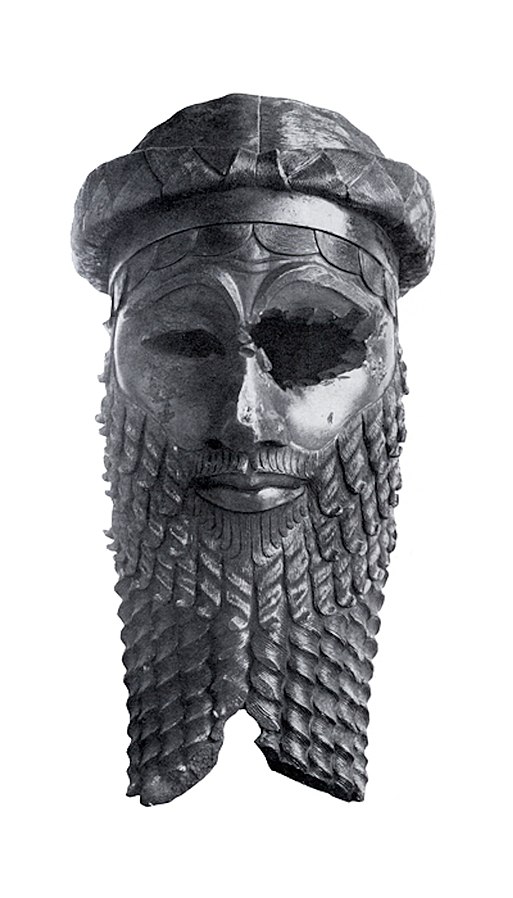
However, this does not have to mean that he was the first king in history14, as the era of the Egyptian pharaohs goes back at least a thousand years before the reign of Sargon of Akkad. Secular history dates Sargon’s reign from 2300-2200 BC, but admits that the timing is highly uncertain. Biblical chronology would place Nimrod’s reign between about 2300 and 1900 BC, since the Flood occurred in 2305 BC and Nimrod was born and ruled thereafter. The Book of Jasher says that he would still have been king in 1953 BC, when Abraham was born according to Núñez’s chronology. The Bible tells us that people at that time were still living very long, since the generations before Abraham lived for more than 200 years after the Flood.15 Therefore, Nimrod’s reign may also have lasted from 2100s to 1900s BC (The Tower of Babel Story and the Confusion of Tongues happened probably during the 2200s BC).
Astrology and astronomy in the light of Christianity
The Bible forbids the practice of witchcraft and the divination of signs, and astrology is often associated with it. However, Jesus himself also said that “there will be signs in the sun and moon and stars” as heavenly portents of his second coming.16 Ramón Núñez offers the following perspective on the subject on page 20 of his book:
Today we know that astrology has no scientific basis, or at least that is what the majority think. And it was rejected by God in the Old Testament. Let us remember what it says in Deuteronomy 17:3: “that he had gone and served other gods and had bowed down to them, whether to the sun, or to the moon, or to all the host of heaven, which I have forbidden”. “You shall not make for yourself an image, nor any likeness of anything that is in heaven above or that is on the earth beneath, …” Exodus 20:4. And it is true that God does not allow consulting magicians, soothsayers, or fortune tellers either. However, he does not prohibit the study of the heavens and their movements, since they are his works.
At the beginning of the book, I indicated that Maimonides recommends studying astronomy and physics to understand the world that God has created. Judaism has never been against the study of the things around us, unlike other religions in the past or today. In fact, the development of the Hebrew calendar has required the effort of many scholars who have had to learn astronomical knowledge to prepare such a complicated calendar due to the demands of compliance with the annual festivals on very specific days.
Hillel II is credited with establishing the current fixed rabbinic calendar in the 4th century AD. So, it is not incompatible with learning the functioning of the heavens and their movements. On the contrary, the knowledge we obtain should make us contemplate the wonders that are in it. Astrology received a severe blow from the moment the sciences, especially physics, discovered mathematical laws, such as the theory of gravitation, that govern the movements of all the celestial bodies that we observe. And the fact that this same force served to explain the movement of the moon or that of a stone thrown with a certain speed into the air took away all the “mystery” or “magic” from the unobservable influences that the stars could exert.
I share this view. Astronomy was given to man to help us better understand the laws of physics by which God created the visible universe. This is why the psalmist states, “The heavens tell of the glory of God;
And their expanse declares the work of His hands.“17The prophet Jeremiah notes how the universe is subject to the laws of physics: “This is what the Lord says, ‘He who gives the sun for light by day And the fixed order of the moon and the stars for light by night, Who stirs up the sea so that its waves roar— The Lord of armies is His name: If this fixed order departs From Me,’ declares the Lord, ‘Then the descendants of Israel also will cease To be a nation before Me forever.’”18 This biblical Judeo-Christian worldview also contributed to the scientific revolution in the 1500s. Historian of science James Hannam writes:
Christians have always used science as a way to understand the natural world’s part in a bigger picture, which, in Christianity’s case, includes the Trinity and salvation. Medieval theologians studied God’s creation without any inkling or wish to produce the comprehensive account of the material universe provided by modern science. Nonetheless, their activity uniquely led to the incredible successes enjoyed by physics, chemistry, and biology, not to mention medicine, over the last couple of centuries. To believing Christians, it is hardly surprising that theologically conditioned natural philosophy should be better at leading to true knowledge about nature than rival systems of thought. However, the historian must tread carefully to understand the factors that Christianity brought to the study of the material universe.
The Bible has relatively little to say about the natural world, but at least the book of Genesis makes it clear where the universe came from. It is not eternal but created by God at the beginning of time. In the fourth century, St. Augustine clarified the doctrine that the world was created ex nihilo, out of nothing. God did not use preexisting material whose properties He had to work with. Thus, as Genesis affirms, creation was “good” and as God wished it to be.
From the twelfth century, Christian theologians began to explore what this meant in practice. One consequence was that nature was separate from God and followed the laws He had ordained for it. William of Conches (1085–c. 1154), one of the most important of the twelfth century’s thinkers, explained, “I take nothing away from God. All things that are in the world were made by God, except evil. But He made other things through the operation of nature which is the instrument of divine operation.” Various Greek philosophies had accepted the rationality of the laws of nature, but for Christians, nature’s laws were God’s laws rather than the laws of logic. God was free to do as He pleased, so it was impossible to work out the laws of nature by using reason alone.
To be sure, not everyone accepted this. A group of philosophers in thirteenth-century Paris, called the Averroists after a Muslim philosopher from Spain named Averroes (1126–1198), took the extreme view that everything, including God, was subject to logically necessary rules. This meant that rational philosophy alone was enough to comprehend all of existence, even the divine mind. Orthodox Christians rejected this doctrine and insisted that God was not subject to any limits, except perhaps the law of noncontradiction. The principle of God’s freedom and absolute power was the subject of a decree by the bishop of Paris in 1277. He stated that because God could do as He pleased, He could do things that philosophers said were impossible, like creating a vacuum or more than one universe. This opened up a world of possibility that Christian natural philosophers were quick to exploit.
Second, God also gave astronomy to man to measure time because the creation account explicitly states, “Then God said, ‘Let there be lights in the expanse of the heavens to separate the day from the night, and they shall serve as signs and for seasons, and for days and years; and they shall serve as lights in the expanse of the heavens to give light on the earth‘; and it was so. God made the two great lights, the greater light to govern the day, and the lesser light to govern the night; He made the stars also.” Only by studying astronomy and the cycle of nature have humans been able to determine, for example, the exact length of a solar year.
Matthew 2:2 and Luke 21:25 would argue that sometimes starry phenomena can also serve as omens of the future as astrology teaches, although I would see it as applying only to Jesus Christ, in whom “all things in heaven and on earth, visible and invisible, were created”19 For this reason, individual Christians should not start reading horoscopes and making life choices based on them. Starry sky phenomena may have followed the birth of other biblical characters such as Abraham, but perhaps only so that future generations could use them to date the exact time of events recorded in the Bible. As God said of the stars, “shall serve as signs and for seasons, and for days and years.”
When the ancient peoples of the Bible spoke of stars, they also meant planets such as Mars, Jupiter and Venus. Both Satan and Jesus are called the morning star in the Bible (because Lucifer tries to mimic God and take His place), referring to the planet Venus, the brightest “star” in the night sky, which often appears in the sky either just after sunset or just before sunrise.20 Angels are also often associated with stars in the Bible21 although the saints of God are also said to “shine like the glow of the expanse of heaven, and those who lead the many to righteousness, like the stars forever and ever.” 22
Historically, humanity today is living in very interesting times, because we may be very close to realising Elon Musk’s dream where humanity literally reaches the stars and becomes a multi-planetary civilisation that not only visits Mars but establishes a permanent colony there. Below is my YouTube video on this theme from 2020. At the end of the video, I quoted William Shakespeare’s statement against astrology: “It is not in the stars to hold our destiny but in ourselves.” During Shakespeare’s lifetime, Judeo-Christian civilization began to increasingly internalize the biblical truth that man was not subjugated to nature, but nature was subjugated to man.23 Elon Musk has often said that he follows the “religion” of scientific research and expanding our consciousness. While this is not a religion that would lead anyone to salvation, it is not in conflict with the biblical worldview, but a direct heir to it.
The conjunction of the five planets in 1953 BC.
Ramón Núñez shows in his book that in 1953 BC. in 1953, the Near East sky witnessed perhaps the rarest phenomenon in history where all five planets visible to the naked eye – Mercury, Venus, Mars, Jupiter and Saturn – formed a conjunction, i.e. aligned with each other as seen from Earth. For example, the Star of Bethlehem is generally thought to have been a conjunction between Jupiter and Saturn in 7-6 BC, or between Jupiter and Venus in 3-2 BC. On page 45, Núñez quotes from an astronomical book about this phenomenon, which says the following:

Three or more planets cannot be considered to be in conjunction simultaneously, although the word is sometimes erroneously used when several planets are close to each other. Such a grouping of planets is called a massing. The best in history occurred in 1953 BCE and was profoundly significant for ancient China, which recorded and remembered it [note: the Chinese calendar is thought to start from this event]. A popular misconception is that planets sometimes line up like billiard balls in a row, and dramatic images of such alignments can even be seen on book covers. The reality is different.
Jean Meeus, the leading researcher on planetary alignments, has calculated how close planets can come to each other. He found that between 3100 BC and AD 2735 – a period covering the entire recorded history – the smallest separation between the five naked-eye visible planets was 4.3 degrees on February 27, 1953 BCE. The best groupings closest to the present are: April 30, 1821 (19.7 degrees); February 5, 1962 (15.8 degrees); May 17, 2000 (19.5 degrees); and September 8, 2040 (9.3 degrees). The 2040 grouping, which also includes a crescent moon as a bonus, will be a spectacular sight.
In his book, Núñez illustrates how this conjunction or massing, which occurred in 1953, before the beginning of our Christian calendar, would have appeared in the regions of Abraham’s birth exactly as the Book of the Jasher describes this phenomenon. Between February 21 and 27, the brightest planet in the sky, Venus, would have moved eastward toward the other four planets visible to the naked eye and “devoured” them, so that on the last day only Jupiter and Venus would have been visible in the night sky. So if the birth of the father of the three monotheistic religions can be dated to February 1953 BC from this alignment of the five planets, then the creation of Adam could also be dated to 3961 BC. You can read a more detailed argument for this under the subheading ” Two different interpretations of the year of Abraham’s birth” in my January Luther article.
So now, in 2024, it would be 5984 years since the creation of Adam – not 5784 as the Jewish chronology incorrectly calculates, or 6027 years as the chronology written by Bishop James Ussher in the 1600s claims. The six millennia of history would be completed in 2040, when a similar massing of the five planets would also occur as at Abraham’s birth, although the planets would not be quite so close together. Why is this significant? Because both Christian and Jewish tradition has taught for 2000 years that the second coming of Jesus (or for the Jews, the beginning of the Messianic age of peace on earth) would occur exactly 6000 years after the creation of Adam. This was the teaching of Barnabas, an ally of the Apostle Paul, of Bishop Irenaeus , a disciple of the Apostle John, and of the school of Elijah, according to the Babylonian Talmud written in the Fourth Century AD.
Seventy seven times seven
In the second half of the article, I will deal with the numerological aspect of the biblical Sabbatical calendar, which has fascinated me for many years. Just as biblical “astrology” must be distinguished from pagan astrology, so too must biblical numerology be distinguished from its Kabbalistic and occult distortions. It is no coincidence that the number seven appears repeatedly in the Bible and its chronology. This is why our Lord said to Peter, who asked how many times he should forgive a brother who had transgressed against him, “not seven times, but seventy times seven. “24 Genesis 4 tells how Lamech, a descendant of Cain, swore: “If Cain is avenged seven times, Then Lamech seventy-seven times!”25 Another patriarch named Lamech , Noah’s father, lived a total of 777 years and died five years before the Flood.26 I wrote on my blog in September 2022:
The basic Hebrew form of “seven” is sheba, which first appears in the Bible in Genesis 1. After this verse, the word appears in its base form in 343 other verses in the Old Testament. If you dig out your calculator, you can work out that 343 equals 7 x 7 x 7. In New Testament Greek, the basic form of seven is hepta and the ordinal number seven is again hebdomos. These two words appear in a total of 70 verses in the New Testament.
Similarly, the words “seven”, “seventy” (hebdomékonta) and “seven times” (heptakis) appear in the NT in a total of 70 verses (according to Strong’s Dictionary27). The words themselves are more frequent, since the same word can appear more than once in the same verse. But the frequency of words also follows this mathematical pattern. In the Old Testament, the words seven, sheba, and seven, shebee, are repeated a total of 491 times . Similarly , the words seven, seventy (shibim) and seven times (shibathayim) are repeated 491 times.28 Jesus himself mentioned the number 490 (70 x 7) in Matthew 18:22.
Galileo Galilei said: “Mathematics is the language in which God has written the universe. God’s hand has written the laws of nature in the language of mathematics”29 I would take the statement even further and say that mathematics is the language in which God has also written the past, the present and the future. For the same God who has written the laws of nature has also written our history according to His good will, which aims at the liberation of the creation from its slavery to corruption into the freedom of the glory of the children of God.30
A sevenfold world history
The Christian worldview does not believe in random but predetermined world history. This idea does not necessarily contradict the free will of humans. Ramón Núñez writes: “Every human being on this earth is responsible for their actions, and the planets or stars do not shape or seal their destiny. For the Christian believer it is essent ial, it is an essential requirement to accept that he has free will. And that always, no matter the circumstances, you have the free choice to take one path or another. You may choose wrong, but that is the price we have to pay.” (s. 91)
The mere thought of a pre-written history allows us to consider, for example, that God has divided world history into six thousand years, at the end of which His Son, who has overcome the death and sin, is meant to return to earth. The concept of a pre-written world history does not just mean that our history is divided into exactly seven thousand years. The entirety of world history should reflect this same reality. In other words, God did not just divide our time into seven-day weeks and seven-year cycles, but all the most significant events in God’s prophetic timeline should be connected to this sevenfold world history.
Only in the light of this sevenfold Hebrew calendar could we establish the exact dates of historical events. It would also be a mathematical proof that our history is not random but predetermined. To illustrate this point, I will take a few examples from biblical history and from the chronology of E.R. Thiele. I emphasise that Thiele derived these dates not from such numerological reasoning but from the years of the reign of the kings of Judah and Israel mentioned in the Books of Kings and the Chronicles, which he reconciled with the chronicles of archaeological excavations and other ancient chronologies of the Near East. According to Thiele’s chronology, the Davidic kingdom was established in 1010 BC and the kingdom was divided into the Kingdom of Israel and the Kingdom of Judah in 930 BC .
The year of the division of the kingdom is often given as either 931 or 930. It is worth noting that according to the Hebrew calendar, the year begins in either spring or autumn, and Thiele demonstrates that in the Northern Kingdom (Israel) the year began in autumn (as in the modern Israeli civil calendar), while in the Southern Kingdom (Judah) the year began in spring (as in the modern Israeli religious calendar). For the same reason, the years 931-930 in the Julian calendar are included within the same year in the Hebrew calendar. According to Thiele’s chronology, the Kingdom of Judah existed from 930 until 587, when the Babylonian king Nebuchadnezzar II destroyed the kingdom and its temple in Jerusalem. The interval is therefore 343 years (930 – 587 = 343) and 343 = 7 x 7 x 7 years.
In the light of the Sabbatical and Jubilee years mentioned at the beginning of the article, the 343rd year would be the 49th Sabbatical year and the seventh Jubilee year. Although according to Moses the Jubilee was to be celebrated as the 50th year, according to ancient Jewish sources the 50th year was also the first year of the new Jubilee cycle and thus the second Jubilee was not celebrated as a centenary year but as the 99th year.31 Counting another 49 (= 7 x 7) years forward from 587, we arrive at 538 BC. In the Hebrew calendar, this is the first year of the reign of Cyrus the Great of Persia, who overthrew the Babylonian Empire on 12 October 539 BC. This date is confirmed by many historical sources. The year 539 = 7 x 77 years. In the same year, the prophet Jeremiah’s vision of the end of Israel’s 70-year exile was fulfilled when Cyrus the Great issued a proclamation allowing the Jews living in Babylon to return to the land of their fathers to rebuild the Temple. This is clear from the following passages:
This entire land will be a place of ruins and an object of horror, and these nations will serve the king of Babylon for seventy years. Then it will be when seventy years are completed I will punish the king of Babylon and that nation,’ declares the Lord, for their wrongdoing, and the land of the Chaldeans; and I will make it an everlasting desolation. I will bring upon that land all My words which I have pronounced against it, all that is written in this book which Jeremiah has prophesied against all the nations. 32
For this is what the Lord says: ‘When seventy years have been completed for Babylon, I will visit you and fulfill My good word to you, to bring you back to this place.’ 33
Now in the first year of Cyrus king of Persia [i.e. 539-538 BC], in order to fulfill the word of the Lord by the mouth of Jeremiah, the Lord stirred up the spirit of Cyrus king of Persia, so that he sent a proclamation throughout his kingdom, and also put it in writing, saying: “This is what Cyrus king of Persia says: ‘The Lord, the God of heaven, has given me all the kingdoms of the earth, and He has appointed me to rebuild for Him a house in Jerusalem, which is in Judah.”34
70 lunar years of Babel
The beginning of the Babylonian exile can be dated in its earliest phase to 606, when Nebuchadnezzar II “in the third year of the reign of Jehoiakim king of Judah… came to Jerusalem and besieged it. “35Around the same time, Jeremiah received his vision of the 70th year of the Babylonian exile.36 However, from 606 to 538 is 68 years, not 70, as Jeremiah’s vision would suggest. This seeming problem can be explained by the fact that the Jews still use the 354-day lunisolar calendar today and ancient Babylon used a 360-day annual calendar.
Although the lunisolar calendar means that years are measured according to a 354-day lunar year (lunar year = 12 synodic months or 354 days), with a leap month added from time to time to keep in line with the 365-day solar calendar, the pure lunar calendar rushes ahead of the solar calendar by about a couple of years in 70 years. For example, the current Islamic calendar is a pure lunar calendar where its 70 years equals 68 years of our Gregorian solar calendar. Thus Jeremiah’s prophecy may have referred to 70 lunar years and not 70 solar years.
70 weeks of Daniel
At the same time that Jeremiah’s prophecy of Israel’s 70-year exile was fulfilled, in 538 BC, Daniel was given a vision of the 70-year weeks.37 The 70 weeks of years is equal to 70 x 7 years and at the end of them God will “finish the wrongdoing, to make an end of sin, to make atonement for guilt, to bring in everlasting righteousness, to seal up vision and prophecy, and to anoint the Most Holy Place.”38 There have been mainly two different interpretations of the vision among Christians, and my view and Ramón’s view of it also differ slightly.
Ramón supports the interpretation of men like Isaac Newton where 70 weeks of years are counted from the seventh year of the reign of the Persian King Artakserxes (i.e. 458-57 BC) to the crucifixion of Jesus in 33 AD (although Ramón says this happened in 30 AD). However, I support the interpretation of men such as Church Father Irenaeus and Robert Anderson (best known for his influential 1894 book The Coming Prince) where the weeks are counted from the 20th year of the reign of Artaxerxes (i.e. 444 BC) to the death of Jesus on the Cross of Calvary in 33 AD39 and the last 70th week of years is separated from it as a separate week, which only begins to be counted at the end of the Church Age of about 2000 years and ends with the second coming of Jesus.
But the most relevant matter to our discussion for now is that both the time of Jesus’ birth and death are tied to this sevenfold Sabbatical calendar. He was born 539 years, or 7 x 77 years after the end of the 70-year exile in Babylon (although in fact He was born a few years before the beginning of our Christian calendar) and He died and rose from the grave 70 x 7 years after the proclamation of King Artaxerxes of Persia. Cyrus the Great of Persia is often held up as a type of the Messiah of Israel, for in the prophecy of Isaiah, which foretold the reign of Cyrus and mentions him by name some 200 years earlier, he is called “the Lord’s anointed” or Messiah.40
Do the years coincide with the Jubilee years?
It should now be pointed out that when I previously mentioned the destruction of the Temple in Jerusalem and the Kingdom of Judah in 587 BC as the 7th Jubilee year, I did not mean that 587 was a Jubilee year in the sense that Sabbatical years and Jubilee years began to be counted when the Israelites arrived in the Promised Land after 40 years of wandering in the wilderness. I meant that the interval between the establishment of the Kingdom of Judah and its destruction was equivalent to seven Jubilee cycles. As to the question of when the Sabbatical and Jubilee years began to be counted, we do not have full certainty, although we already know from Thiele’s chronology that the Israelites arrived in the Promised Land in 1406 BC (1446 – 40 = 1406).
Indeed, the second-century Jewish calendar Sedam Olam (on which Jews still base their calendar today) claims that the Sabbatical and Jubilee years would not have begun to be counted until 14 years after the arrival in the land:
Seven years were devoted to conquest (after the entry into Canaan) and seven years to land division. Thus the Israelites settled in Gilgag for fourteen years: seven years of conquest and seven years of division….they established the tabernacle of the congregation; … then they began to count tithes, sabbatical years and jubilee years.
Seder Olam; 11:11-12
From 1406, 14 years will be reached in 1392. If we stretch this date by another year or two, so that the counting of Sabbatical and Jubilee years would have begun in 1391 or 1390 BC, we end up with some pretty interesting dates. If we count from 1390, the seventh Jubilee year, or 343rd year, would coincide with the years 1048-47. Around this time, the kingdom of Israel would have been established and Saul anointed king in the light of Thiele’s chronology.41 The sixteenth jubilee year would coincide with 606 BC, when Nebuchadnezzar II besieged Jerusalem and took King Jehoiakim in brass knuckles to Babylon, along with Daniel and other Jewish exiles.42 This is also the beginning of the 70 years of exile predicted by Jeremiah.
Why is the 16th Jubilee year significant? Because it is equal to 784 years (49 x 16 = 784) and 784 = 777 + 7. Thus, from the first Sabbatical year celebrated by the Israelites in 1384-83, 777 years would elapse until the 70-year exile of Babylon began in 606 BC. In 536, when Daniel had his last vision after the end of the Babylonian exile43 854 years had passed since the start of this calendar. The year 854 equals 777 + 77 years. Interestingly, Ramón also mentions 854 years as being the interval between the convergence of the five planets Saturn, Jupiter, Mars, Venus and Mercury, when their convergence is measured at an angle of single digits numbers. On page 25 he writes:
There is a cycle in conjunctions that we are going to see in the rest of the book that will be interesting. The question is: are conjunctions repeated in some way? Yes, approximately every 854 years, the same conjunction is repeated on the same or similar date and in the same constellation. For the time periods we are considering of a few thousand years, this will be true (for periods longer than tens of thousands of years, the conjunction moves to another constellation). Let’s first look at some examples of this: the conjunctions of the years 332, 1186 and 2040 AD are separated by an interval of 854 years since 2040=1186+854=332+ 2 ∙854. All three conjunctions occurred in the constellation of Virgo. And this is true, in general, for any other conjunction we want. If we add 854 years to the date of a conjunction that we consider, it will give us another similar conjunction… In short, if we have a J-S conjunction on a certain date there will be another one almost exactly the same 854 years later or there has been another one the same 854 years before (the proof is in the other book).
Using the same formula – assuming that the counting of Sabbatical and Jubilee years began in 1390 BC – we can calculate that the 70th Jubilee year, or 3430th year (49 x 70 = 3430), coincides with the year 2040, which would also mark the beginning of the seventh millennium of history according to my, Ramón’s and Luther’s chronology. In the Bible, the Jubilee symbolizes essentially the same thing as the Sabbath – the coming deliverance of the earth from the bondage of the corruption of sin and its millennial Sabbath rest: “Sanctify the fiftieth year, and proclaim deliverance in the land to all its inhabitants; let it be a year of jubilee for you; each one of you shall then return to his inheritance and his family“44
I have written in my blog in previous years that the 70th Jubilee Year would begin in 2025, when the State of Israel turns 77. But this calculation is based on the idea that the counting of Sabbatical and Jubilee years would have started at the same time as the Israelites arrived in the Promised Land at the end of the 40-year wilderness journey in 1406 BC. In any case, the 70th Jubilee year should be completed between 2025 and 2040 and will probably be the last Jubilee year before the Second Coming of our Lord.
The “seven times” comes to an end
In 2040, not only would the 70th Jubilee Year and the seventh millennium of history begin, but the same year would also see the completion of the “seven ages”. This can be deduced from prophecies such as Daniel and Revelation where time, times and half a time are defined as comprising 1260 days or 42 months. This refers to the ancient 360-day calendar where each month consisted of 30 days and the year of 360 days. Thus, three and a half years and 42 months equals 1260 days. Thus seven years would be equivalent to 2520 days (1260 x 2 = 2520). But since in Daniel’s calendar the “weeks” are counted as years, so also 2520 days can be counted as 2520 years. Furthermore, these years should be counted as 360-day years, not 365-day years.
Thus, seven times can be converted into 907 200 days because 360 x 2520 = 907 200. This in turn can be converted to 2484 solar years, since 907 200 : 365.24 = 2483.8, rounding to 2484 years. Adding 2484 years to March 444 BC – from which, according to my interpretation, Daniel’s 70 weeks of years should start to be counted – leads to the year 2040 (2484 – 444 = 2040). Since the “zero year” is not counted unless it is an astronomical calendar, the year is actually 2041, but since the 2484 years were slightly short, the seven years will be completed in December 2040. You can check this for yourself on this site by adding March 1 444 BC. 907 200 days.
Are these seven times to be understood in the light of verse 27 of Daniel 9: “And he will confirm a covenant with the many for one week, but in the middle of the week he will put a stop to sacrifice and grain offering; and on the wing of abominations will come the one who makes desolate, until a complete destruction, one that is decreed, gushes forth on the one who makes desolate.” Although this verse refers to the seven-year agreement of the Antichrist with Israel that begins the last week of the vision, could it be interpreted as containing a double meaning where the last week means also 2520 years (360-day years) instead of 2520 days?
In that case, the covenant would not be confirmed by the Antichrist, but by God himself, who confirmed his covenant with Abraham, Isaac and Jacob in 444 BC, when Artaxerxes I of Persia allowed the Jews to rebuild Jerusalem and return to their ancestral lands. Since the original meaning of the vision would only reveal the historical date of Jesus’ first coming and His death on the Cross, the 2520 years or “seven times” added to the year 444 BC would also reveal the historical date of His second coming, and when the 70th week of the year would also come to its conclusion, not only in 2520 days but also in 2520 years.
This is one interesting explanation for Daniel’s prophecy. Ramón also offers an interesting interpretation of Daniel Chapter 12’s vision of 1290 and 1335 days where he reads them as 1290 and 1335 years. According to Ramón’s interpretation, 1290 and 1335 should be added together and added to the year of the destruction of Solomon’s temple in 586 (although others say it was 587) BC. 1290 + 1335 = 2625 and 2625 – 586 = 2039. But since the zero year is not included, the real year is 2040. Daniel 12:11-13 predicted:
And from the time that the regular sacrifice is abolished and the abomination of desolation is set up, there will be 1,290 days. Blessed is the one who is patient and attains to the 1,335 days! But as for you, go your way to the end; then you will rest and rise for your allotted portion at the end of the age.”
According to Ramón, these years are therefore counted “from the time when the daily sacrifice is removed”, i.e. from the year of the temple’s destruction in 586. “…abomination of desolation is set up, there will be 1,290 days.” This part of the vision refers to what happens at the end of 1290 years: the abomination of desolation is set on the site of Solomon’s Temple, i.e. the Islamic Al-Aqsa Mosque was founded in 705 AD. Finally, ” Blessed is the one who is patient and attains to the 1,335 days!” In other words, another 1335 years would be added to the year 705, ending in 2040. In my January Luther article, I myself calculated, using similar logic, that the years 2040-41 would also mark 1260 years since the founding of the papacy, and thus the interpretation of the 1260 years of the papacy advocated by Isaac Newton, among others, should be dated from 781 to 2041, rather than from 800 to 2060, as Newton suggested. I suggest you read more about this reasoning in the subheading of my article Why did Newton predict the end of the world in 2060?
Footnotes
- Col. 2:16 ︎ ↩︎
- Matthew 5:17 ︎ ↩︎
- Isaiah 53:4-7 ︎ ↩︎
- Heb. 4:9-10 ︎ ↩︎
- Irenaeus: Against Heresies, BOOK V, Chapter 28. http://www.gnosis.org/library/advh5.htm ︎ ↩︎
- https://earlychristianwritings.com/text/barnabas-lightfoot.html ︎ ↩︎
- Acts 4:36-37, 15:2︎ ↩︎
- 2. Pet. 3:8-9 ︎ ↩︎
- Chapter 6 of 1 Kings tells us that the Exodus took place 479 years before the Temple was founded, in 1446 BC, and Genesis 6 tells us that the Exodus took place 479 years before the Temple was founded. 15:16, 2. Moos. Galatians 3:16 dates God’s promise to Abraham to 430 years before the Exodus, 1876 BC. ︎ ↩︎
- Gen. 1. 12:4 ︎ ↩︎
- Joshua 10:13, 2 Samuel 1:18 ︎ ↩︎
- 2 Timothy 3:8 ︎ ↩︎
- Gen. 1. 10:8-10, 1 Chron. 1:10, Mic. 5:5 ︎ ↩︎
- The biblical phrase “the first ruler on earth” can be understood to mean either the first ruler after the Flood or the first king in history to rule a large supranational empire. ︎ ↩︎
- Gen. 1. 11 ︎ ↩︎
- Luke 21:25 ︎ ↩︎
- Psalm 19:2 ︎ ↩︎
- Jeremiah 31:35-36 ︎ ↩︎
- Col. 1:16 ︎ ↩︎
- Isa. 14:12, Rev. 22:16 ︎ ↩︎
- Job 38:7, Dan. 8:10, Rev. 1:20, 12:4 ︎ ↩︎
- Dan. 12:3 ↩︎
- Gen. 1:28 ︎ ↩︎
- Matthew 18:22 ︎ ↩︎
- Genesis 4:24 ︎ ↩︎
- Gen. 1. 5:30-31 ︎ ↩︎
- These occurrences I have apparently derived from this website and they seem to apply only to the Byzantine Textus Receptus manuscript on which the King James Bible is based. It should be noted, however, that I am not a representative of the King James Version Only movement or an advocate of its ideas. ︎ ↩︎
- I have based my calculations on the figures provided by this website. ︎ ↩︎
- This oft-repeated quote is not a word-for-word quotation of Galileo’s words, and although the original statement does not contain a reference to God, Galileo believed in God and said in his letter to Grand Duke Christina: “I do not feel obliged to believe that the same God who has bestowed upon us reason, understanding and intellect means that we should give them up.” ↩︎
- Romans 8:21 ︎ ↩︎
- This is clear, for example, from the apocryphal book of Jubilees, which was written before the beginning of the Christian era ︎ ↩︎
- Jer. 25:10-12 ︎ ↩︎
- Jer. 29:10 ︎ ↩︎
- Ezra 1:1-2 ︎ ↩︎
- 2 Chron. 36:6, Dan. 1:1 ︎ ↩︎
- Jer. 25:1, 11 ︎ ↩︎
- Many Bible commentaries state that Dan. 9:1, “the first year of the reign of Darius son of Ahasuerus” actually refers to the first year of the reign of Cyrus the Great. ↩︎
- Dan. 9:24 ↩︎
- In this calculation, years are also counted as prophetic years of 360 days ↩︎
- Isa. 44:28, 41:1 ︎ ↩︎
- Solomon, David and Saul all reigned for 40 years (1 Kings 2:11, 11:42, and Acts 13:21), so from the division of the kingdom in 930 BC, Saul’s reign would have begun in 1050 BC. The coronation may have been in 1048-47. ︎ ↩︎
- 2 Chron. 36:6, Dan. 1: ︎ ↩︎
- Dan. 10:1, The 3rd year of Cyrus the Great was 536 BC. ︎ ↩︎
- Leviticus 25:10 ↩︎
 Author & blogger Samuel Tuominen’s archives

Leave a comment